On September 30, 2026 six US physician organizations, including the American Medical Association, the American College of Physicians and the American College of Surgeons, issued a joint statement that AI should not be positioned as superior to physician judgment. The same day, California Governor Gavin Newsom signed AB 1979 and SB 503, which require developers of clinical decision tools to take reasonable steps to reduce known bias and preserve the ability of doctors and licensed providers to use their own professional judgment when AI is involved in patient care.
Who said what
The joint statement came from the American Academy of Family Physicians, the American Academy of Pediatrics, the American College of Obstetricians and Gynecologists, the American College of Physicians, the American College of Surgeons and the American Medical Association. It does not oppose AI and says the technology has real potential. Its objection is to framing AI as better informed than the clinician, or as a step patients should take before a clinical decision. Its core argument fits in one line: "Physicians evaluate patients in context, drawing on years of training and experience."
California's two bills were part of a package of 13 AI measures signed the same day, which also included SB 574, the first state law on lawyers' use of AI.
Where patients already are
Both moves land on a patient journey that has already changed. OpenAI's January 2026 report AI as a Healthcare Ally said more than 40 million people ask ChatGPT health questions every day, that roughly one in four of its 800 million regular users sends a health prompt each week, and that health makes up more than 5% of all ChatGPT messages. Patients use it to understand symptoms, prepare for visits and decide whether they need urgent care.
Why it matters for your business
Put the two halves together and the job of a practice's website changes. The patient's first explanation of a symptom increasingly comes from an assistant, and the profession is now saying, in public and in law, that the explanation is not the decision. So the website is where a patient goes to check what the AI told them and to decide whose judgment to trust.
That is an argument for making the people visible. Name your clinicians, list their training and what they treat, explain how to reach a person, and if you use AI anywhere in scheduling or chat, say where it stops and a human takes over.
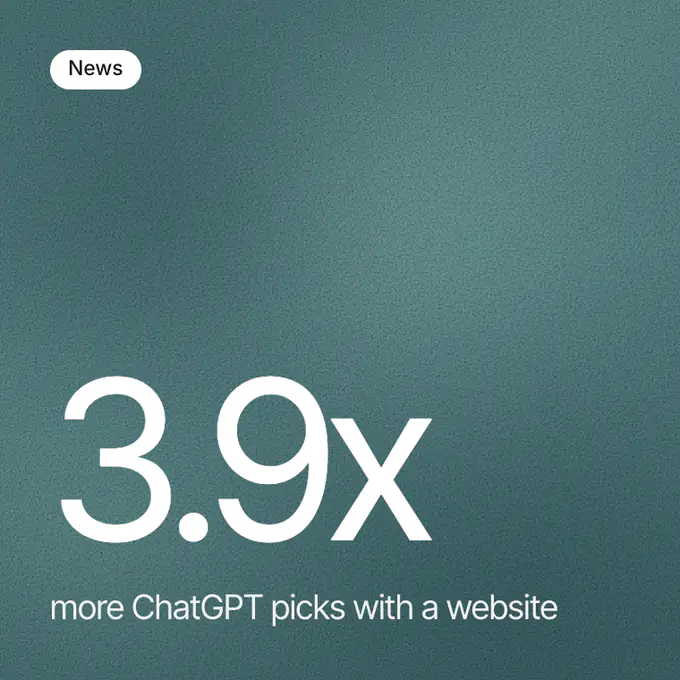
None of this is new advice for a good practice website. What is new is that the same pages decide two things at once: whether the patient trusts you, and whether an assistant has enough to recommend you in the first place. In September's study of 139,294 local listings, chiropractors without a website were named by ChatGPT 1.5% of the time. The practices with something to read are the ones that get named.
Sources
- Statement from leading physician organizations on the role of augmented intelligence (American Medical Association, September 2026)
- California's nation-leading AI framework just got stronger (Office of the Governor of California, September 2026)
- AI as a Healthcare Ally (OpenAI, January 2026)