

Tools for tracking LLM brand visibility have exploded in the last 18 months, and so has the noise around them. To help you cut through the noise, we tested and reviewed eight leading platforms.
We’ve compared them across LLM coverage, analytics depth, pricing, usability, and one factor most roundups ignore entirely: whether the tool actually helps you act on what you find, or just shows you a dashboard and leaves the rest to you.
In this guide, you'll find a quick-reference comparison table, a breakdown of the five criteria we used to evaluate each tool, and detailed reviews of all eight platforms.
Whether you're a startup tracking your first prompts or an enterprise team trying to connect AI visibility to revenue, there's a tool on this list for you.
Why LLM Brand Visibility Tracking Matters Now
When someone asks ChatGPT or Claude for product recommendations, the AI's response is often the entire experience: no links, no website visits, no opportunity for your landing page to make its case.
That's a fundamentally different world from the one most marketing teams have been optimizing for.
McKinsey reports that by 2028, $750 billion in US revenue will funnel through AI-powered search. Major publishers are already reporting 800% year-over-year increases in LLM-driven traffic, and Gartner predicts a 25% drop in traditional search engine volume by 2026.
Brands that dominate traditional SEO may be absent from AI responses, while challengers with highly structured content (often found in forums or detailed reviews) capture citations.
Ryan Smith, Hootsuite's Senior Director of Marketing Strategy, puts it plainly: "In some ways, we should think of LLMs as a new stakeholder of the brand. A very influential one that increasingly guides brand visibility, reputation, consideration, and even purchase decisions."
What Is an LLM Brand Visibility Tool?
An LLM visibility tool monitors how your brand appears in responses generated by AI platforms like ChatGPT, Gemini, Perplexity, and Claude.
It shows you what large language models say about your brand when people ask for comparisons, explanations, or recommendations, and lets you see if your brand appears, what AI says about it, and how it compares to others.
The core metrics these tools track are:
Share of voice: how often your brand gets mentioned relative to competitors across a consistent set of queries
Citation frequency: how often AI platforms link to or reference your content directly
Sentiment: whether AI describes your brand positively, neutrally, or negatively
Prompt performance: which specific queries your brand ranks for vs. ones where competitors show up instead
Because no single tool captures the entire picture, the best current approach layers multiple tracking signals, including share of voice tracking, referral tracking in GA4, and branded homepage traffic in Google Search Console.
How to Pick the Right Tool for Your Team
A few things worth thinking through before you compare pricing pages:
What do you actually need, monitoring or execution? Some tools are pure dashboards: they tell you what's happening. Others go further and help you act on what they find. If your team is already stretched thin, a tool that only surfaces insights without helping you act on them can become expensive shelfware.
Which LLMs matter most to your audience? ChatGPT and Perplexity tend to dominate right now, but Gemini is growing fast in certain verticals. Make sure the tool you're considering covers the platforms your buyers actually use.
How many prompts do you need to track? Entry-level plans often cap you at 15–25 prompts per month, which can feel limiting quickly. Think about how many product categories, competitor comparisons, and use-case queries you'd actually want to monitor.
Do you have global audiences? Multi-language, multi-country tracking isn't universal. Check before you commit.
Are you already on Semrush or Ahrefs? If yes, expanding within those platforms might be the most economical path. If not, a dedicated AI visibility tool likely gives you more depth.
Evaluation Criteria
All eight tools below were assessed across five areas:
Criteria | What We Looked At |
LLM Coverage | Which AI platforms are tracked, prompt volume, and update frequency |
Analytics Depth | Share of voice, sentiment, citation tracking, competitor benchmarking |
Execution Capability | Does the tool help you act on findings, or just surface them? |
Pricing & Scalability | Entry cost, per-prompt economics, enterprise options |
Usability | Dashboard clarity, setup time, and team collaboration features |
Quick Comparison
Tool | Best For | Starting Price |
Erlin.ai | Monitor + execute across the full GEO workflow | $97/mo |
Semrush | AI visibility connected to a full SEO workflow | $99/mo per domain; SEO + AI from $199/mo |
Profound | Enterprise-grade multi-LLM analytics | $499/mo |
Peec AI | Global mid-market tracking | €89/mo |
Otterly AI | Budget-friendly daily monitoring | $29/mo |
Ziptie | AI search benchmarking and citation analysis | $69/mo |
Scrunch AI | Content delivery for AI agents | $300/mo |
Ahrefs Brand Radar | Detailed citation tracking for SEO pros | $199/mo add-on |
The 8 Best Tools for Tracking LLM Brand Visibility
1. Erlin.ai: Best for Teams Who Need to Move from Insight to Action
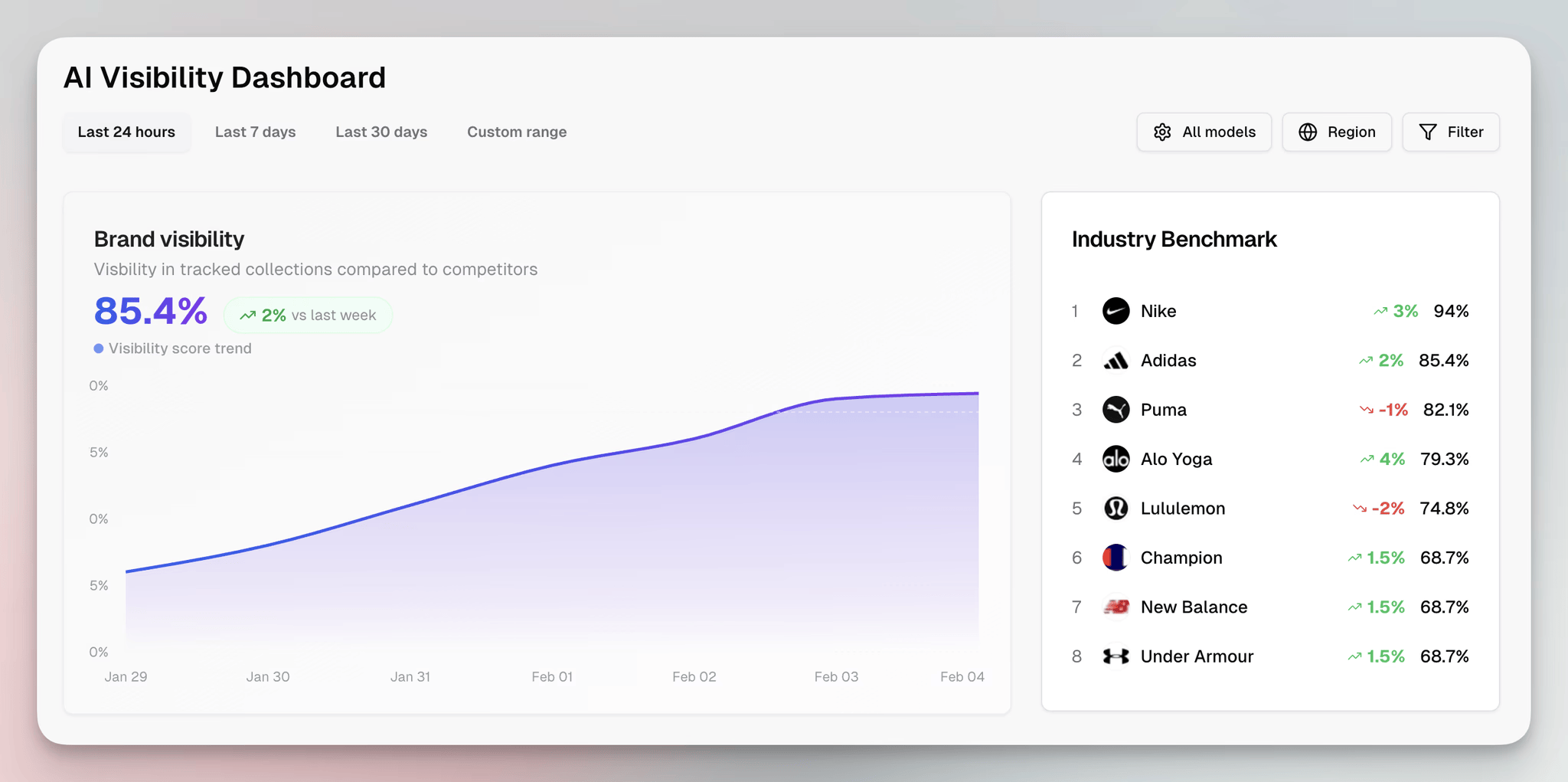
Most visibility tools give you a dashboard and leave the rest to you. Erlin.ai takes a different position: it's built for teams that need to see the gaps and close them, without spending hours figuring out what to do next.
The platform offers data insights, opportunity identification, and action centers for streamlined workflows. It unifies AI search, SEO, and analytics to eliminate switching between multiple systems.
What it tracks: Erlin monitors brand visibility across ChatGPT, Gemini, Claude, and Perplexity. It pulls in data on share of voice, sentiment, citation sources (including Reddit and YouTube), and competitor positioning. This gives you a full picture of where you stand and where you're losing ground.
Where it goes further (the Action Centre): This is where Erlin separates itself from pure monitoring tools. The Action Center transforms identified opportunities into structured, executable tasks with clear ownership and priority.
It automates research, builds briefs, drafts content in brand-aligned tone, and prepares responses for high-impact conversations, allowing teams to address visibility gaps faster while maintaining accuracy, consistency, and workflow transparency.
In practice, this means:
Turn opportunities into tasks automatically. Missing prompts, visibility gaps, and content needs get converted into tasks with assigned owners and deadlines. Prioritized by impact and quick wins, not just by recency.
From research to first draft without manual input. AI handles the research, builds the brief from the opportunity context, and produces a first draft. You review and approve, rather than starting from a blank page.
Respond where it matters. Erlin identifies Reddit threads and community discussions driving visibility in your category. It drafts responses for high-impact threads, you review and post. Instead of waiting weeks to respond to a conversation that's already shaping how AI describes your category, you can act in minutes.
Customer results include AI referrals converting 3x better than organic traffic, share of voice up 18% in a single month, and teams shipping more content while tracking exactly which pages get cited in ChatGPT.
Pricing:
Standard: $97/mo
Pro: $249/mo
Enterprise: Custom
Free audit available.
Best for: Growth teams, content teams, and agencies that need to track and act. Also well-suited for SaaS brands and any business where showing up in AI-generated comparisons directly affects the pipeline.
Things to know: Higher tiers are needed for managing multiple brands or client accounts at agency scale. The depth of execution features means there's a bit more to set up than a pure monitoring tool.
2. Semrush: Best for Teams Managing AI Visibility and SEO Together
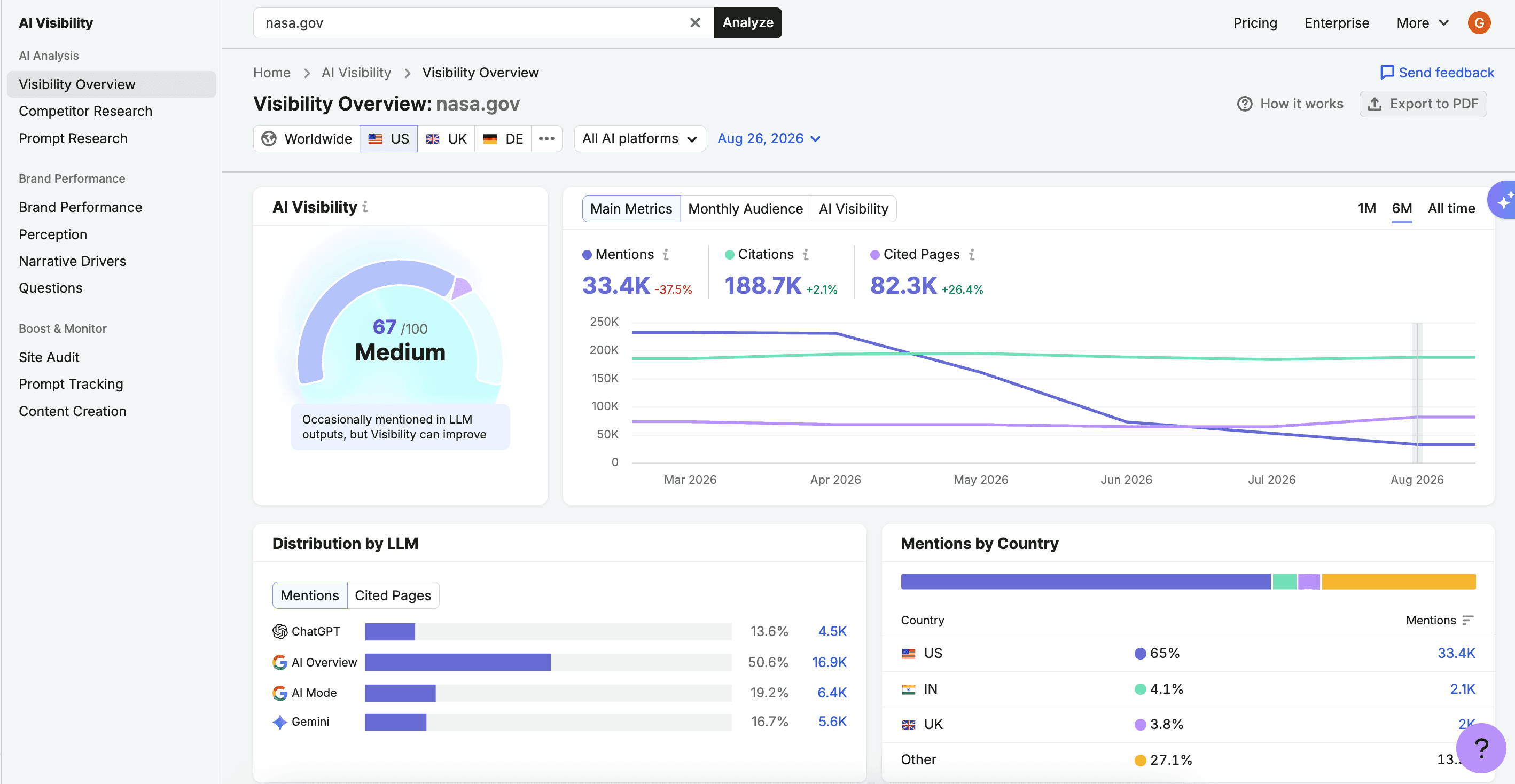
Semrush tracks how brands appear across ChatGPT, Google AI Overviews, Google AI Mode, Gemini, and Perplexity, then connects those findings with keyword, backlink, content, competitive, and technical SEO data. Its AI visibility capabilities include a 0–100 AI Visibility Score, daily prompt and citation tracking, sentiment analysis, share of voice, competitor benchmarking, and prompt research.
The main differentiator is the connection between AI visibility and SEO. When a competitor appears more often in AI answers, teams can investigate the content, authority, backlink, entity, and technical signals that may be contributing to the difference instead of managing the two channels in separate tools.
Pricing:
Standalone AI visibility: starts at $99/month per domain
Combined SEO and AI visibility: starts at $199/month
Enterprise AI optimization: custom pricing
Best for: SEO teams expanding into AI visibility tracking, and mid-market brands that want one subscription covering traditional and AI search in the same dashboard.
Things to know: The AI visibility offering is available as a standalone subscription, so an existing Semrush SEO plan is not required. Teams that already have another SEO platform and only need narrowly focused monitoring may prefer a simpler standalone tool. Standard coverage does not currently include every model—broader coverage such as Claude and Grok is available through the Enterprise offering.
3. Profound: Best for Enterprise Multi-LLM Analytics
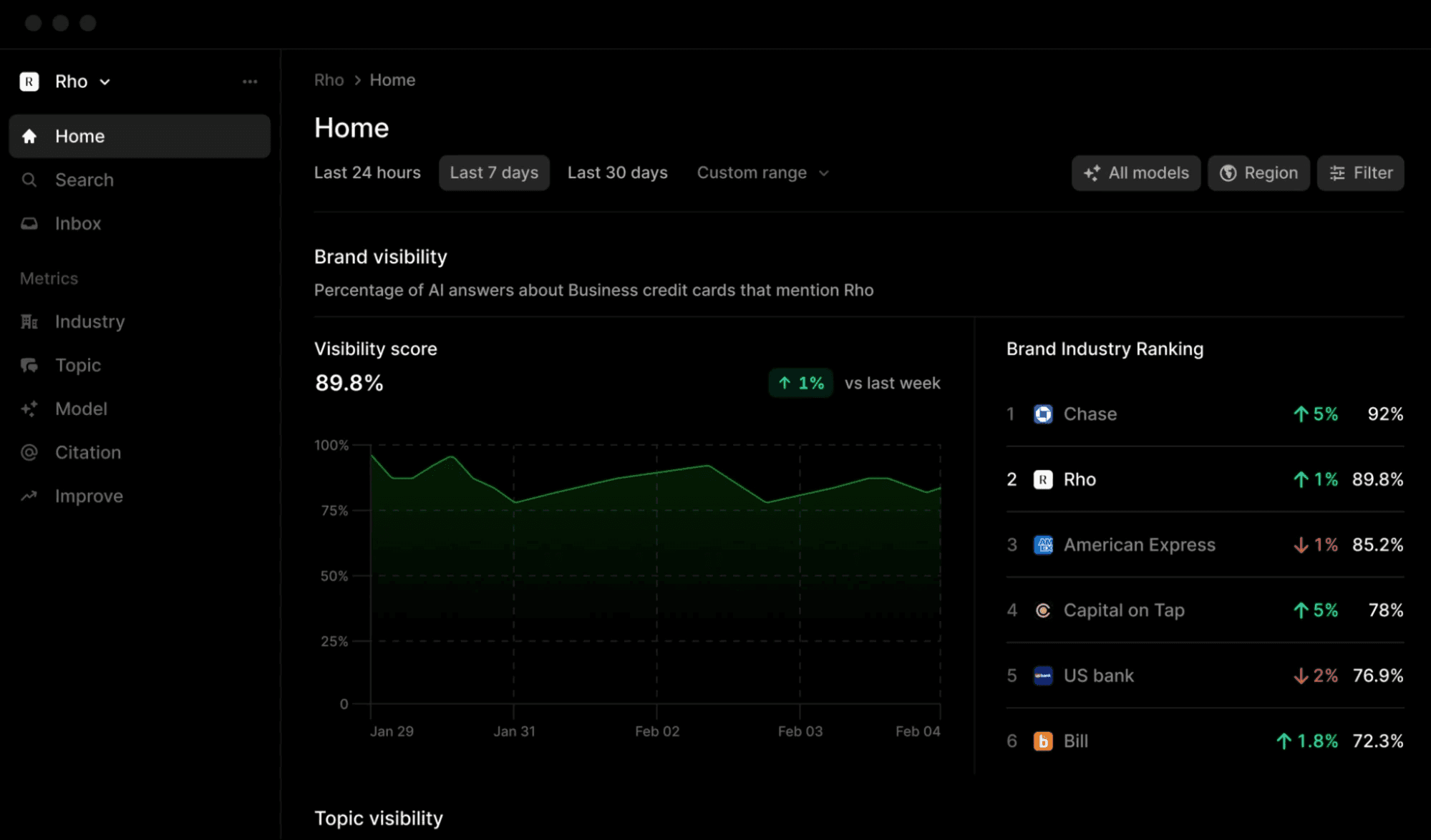
Profound launched in 2024 and raised a $20M seed round in June 2025 to focus specifically on AI search. The product is built for large teams that need statistically reliable data at scale.
Profound captures live AI responses through front-end monitoring and synthetic queries, providing comprehensive visibility across ChatGPT, Claude, Google AI, and Perplexity. The Conversation Explorer enables custom prompt testing, while GA4 integration connects AI mentions to revenue attribution.
What sets it apart is the approach to data quality. Rather than just querying APIs, it monitors actual platform interfaces, meaning you're seeing what real users see, not just backend output.
Ramp achieved a 7x increase in AI brand mentions within 90 days using Profound's optimization recommendations.
Pricing: Starts at $499/mo. Custom trials for enterprise teams.
Best for: Enterprise and mid-market SaaS companies that need deep multi-platform data and can justify the price with revenue attribution.
Things to know: The cost is a real barrier for smaller teams. This is a tool built for companies with dedicated search or brand intelligence functions.
4. Peec AI: Best for Global Mid-Market Teams
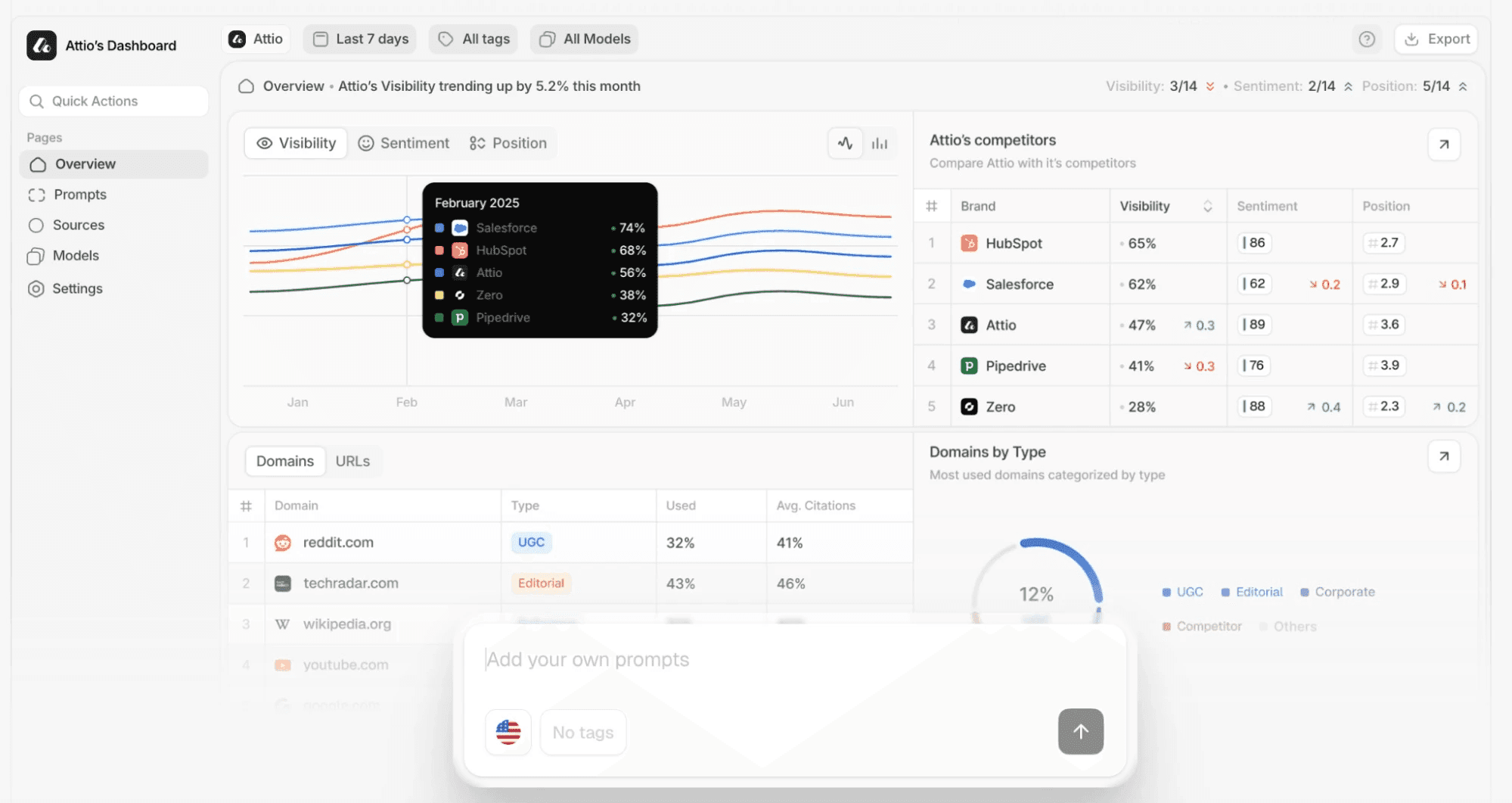
Peec AI was founded in 2025 and backed by a €21M Series A, following a €5.2M seed round. It monitors brand visibility and sentiment across major AI platforms, with strong multi-country and multi-language support.
The interface is clean and focused, good for teams that want reliable data without a steep learning curve. All plans include unlimited seats, which makes it particularly practical for mid-size organizations where multiple people need access.
Pricing:
Starter: €89/mo (25 prompts, ~2,250 answers/month)
Pro: €199/mo (100 prompts, ~9,000 answers/month)
Enterprise: €499/mo+
Base coverage includes ChatGPT, Perplexity, and Google AI Overviews. Additional engines, such as Gemini, Claude, DeepSeek, Llama, and Grok, can be unlocked through paid add-ons.
Best for: Mid-market brands with international audiences and teams where multiple stakeholders need access to the same data.
Things to know: Prompt limits on lower tiers can feel restrictive. Tracking every LLM you care about can add up once you factor in add-ons.
5. Otterly AI: Best Budget Entry Point
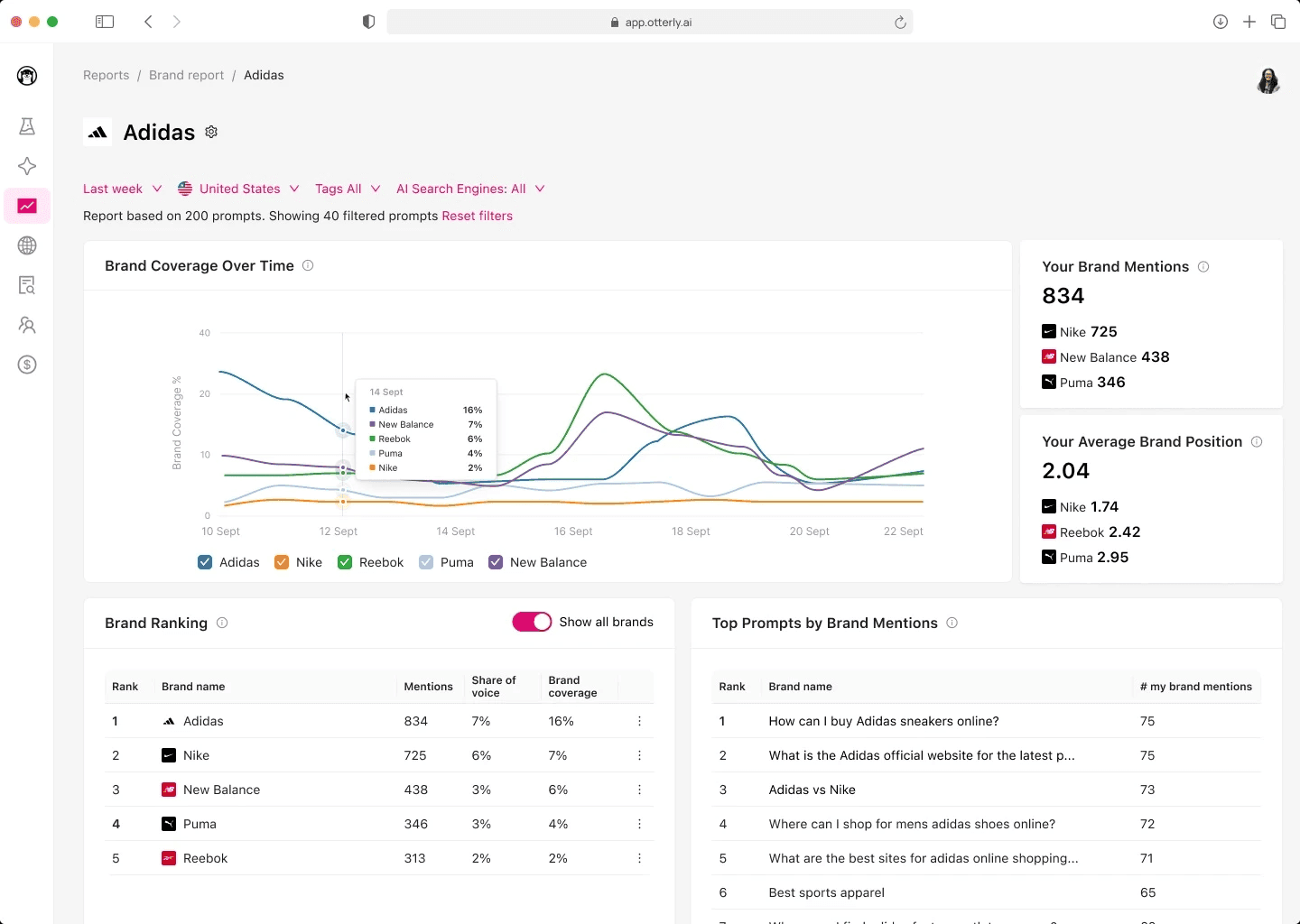
If you're just getting started with LLM visibility tracking and want something affordable to learn from, Otterly is worth a look. At $29/mo for the Lite plan, it's the lowest-cost way to get real data on brand mentions, citations, and share of voice.
It distinguishes between LLM monitoring (what AI systems say about you) and AI search monitoring (how you appear in AI-enhanced search results like Google AI Overviews), a distinction that matters more as these channels diverge.
Pricing:
Lite: $29/mo (15 prompts)
Standard: $189/mo (100 prompts)
Free trial available
Best for: Startups and small teams beginning their GEO journey. Also good for marketers who want to test the category before committing to a higher-cost platform.
Things to know: Sentiment analysis is less detailed than dedicated platforms. Customization is limited. Think of this as a starter tool rather than an ongoing enterprise solution.
6. Ziptie: Best for Competitive Benchmarking
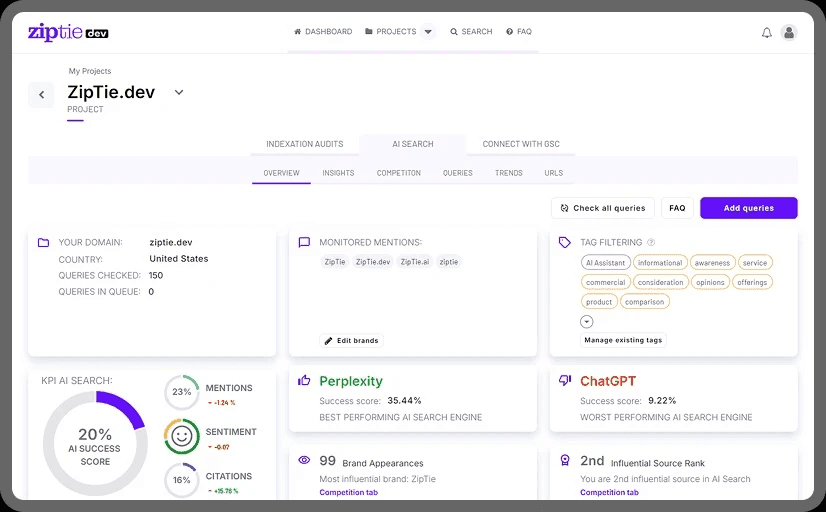
Ziptie focuses on AI search analytics across Google AI Overviews, ChatGPT, and Perplexity. The platform's strength is in competitive intelligence: it gives you citation share data and content optimization recommendations framed around what your competitors are doing, not just what you're doing.
It's not a standalone SEO replacement, but it complements traditional tools well for teams that want to understand where they're winning and losing ground in AI citations specifically.
Pricing:
Starter: $69/mo
Pro: $159/mo
Enterprise: Custom
Free demo available
Best for: Brand and PR teams during product launches, and digital teams trying to identify specific AI visibility gaps relative to named competitors.
Things to know: Platform coverage is narrower than some alternatives. Best used alongside a broader SEO stack rather than as your only visibility tool.
7. Scrunch AI: Best for Enterprise Content and Agent Optimization
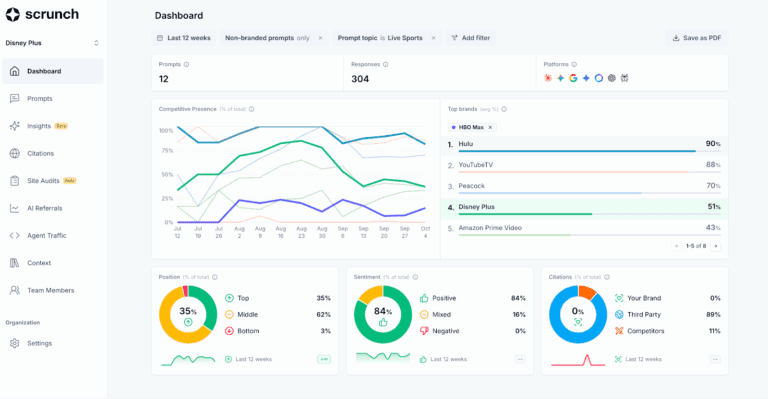
Scrunch AI takes a different angle; rather than just tracking what AI says about you, it focuses on optimizing how your content performs when AI agents are the ones interacting with it.
Its Agent Experience Platform monitors LLM presence, tracks how AI crawlers access your content, and provides citation analysis.
Trusted by companies like Lenovo, it's built for larger content operations where managing what AI agents can see and how they interpret your brand is a strategic priority.
Pricing:
Starter: $300/mo (350 prompts)
Higher tiers up to $3,000+/year
Custom enterprise pricing
Best for: Enterprises with large content teams, agencies managing multiple clients at scale, and organizations focused on content delivery to AI agents rather than just monitoring mentions.
Things to know: The entry price is a real consideration. This isn't a tool for teams dipping their toes in; it's for organizations that have already decided AI content optimization is a core workstream.
8. Ahrefs Brand Radar: Best for SEO Pros Who Want LLM Citation Data
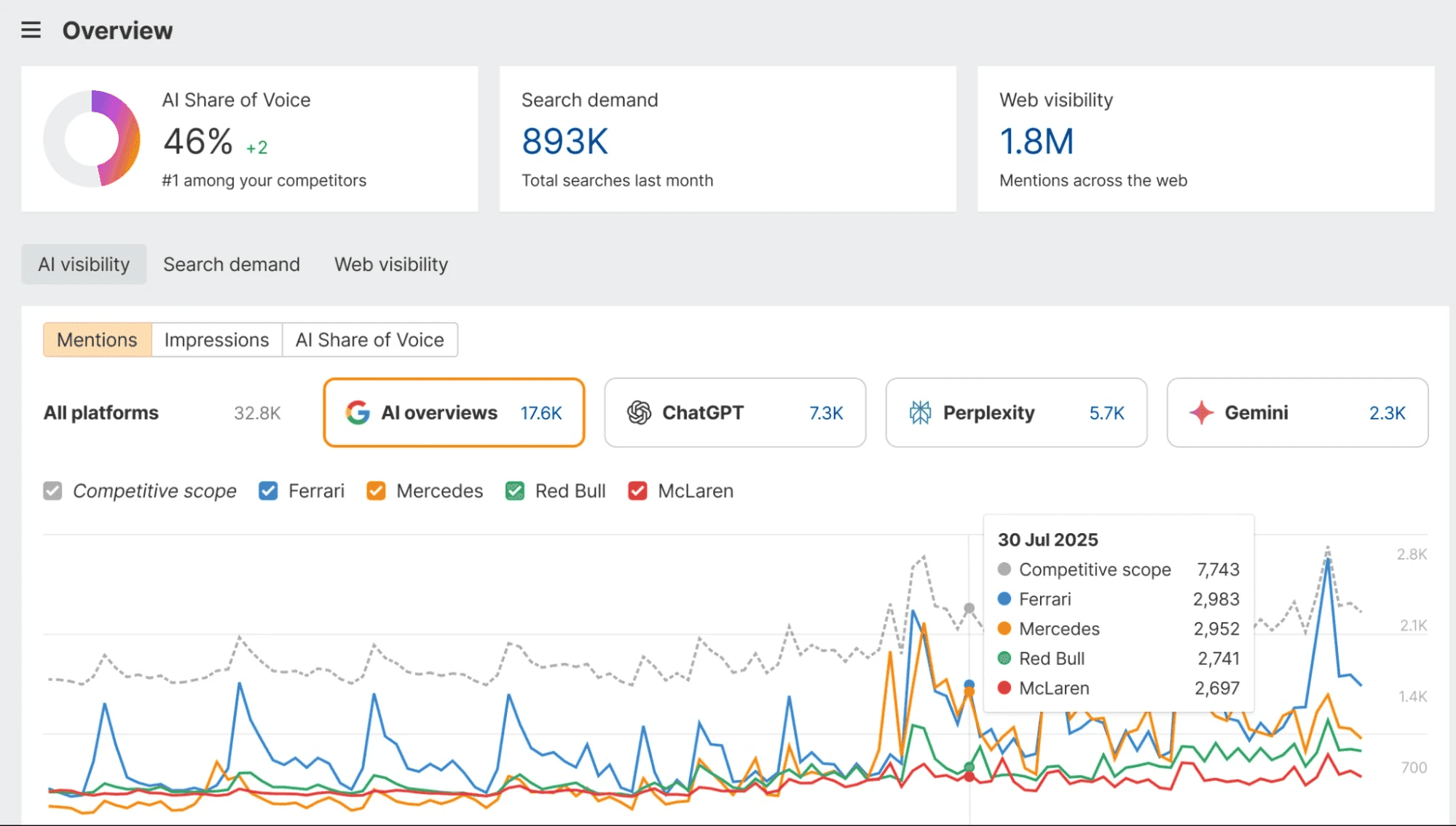
Ahrefs Brand Radar tracks citations, impressions, and share of AI voice across LLMs with brand variation support, meaning it handles common misspellings and alternative names for your brand.
For teams already deep in the Ahrefs ecosystem, it connects AI visibility data to the backlink and SEO intelligence they're already working with.
The citation views are detailed, and the competitor gap analysis is useful for understanding why certain content gets cited while other pages don't.
Pricing:
Brand Radar: $199/mo per index
Bundle: $699/mo + base Ahrefs plan from $129/mo
Trials available via Ahrefs
Best for: SEO professionals who want LLM citation data as part of their broader authority-building work.
Things to know: This only makes financial sense if you're already on Ahrefs. Bundle pricing adds up fast. Not the right call if AI visibility is your primary use case rather than one signal among many.
FAQs
What exactly is LLM brand visibility tracking?
It's the practice of systematically monitoring how AI platforms like ChatGPT, Gemini, Perplexity, and Claude describe your brand in their responses. Unlike SEO rank tracking, you're not watching a position in a list; you're watching whether AI mentions you at all, what it says, how it compares you to competitors, and which sources it's citing when it does. The goal is to understand and influence how AI models perceive and recommend your brand.
How is LLM visibility different from SEO?
Traditional SEO targets how your pages rank in search results. LLM visibility tracks how your brand appears in AI-generated answers — a fundamentally different system. High SEO rankings don't guarantee visibility in AI answers. LLMs prioritize semantic relevance and structural clarity over domain authority alone, creating a "visibility gap" where brands dominating traditional SEO may be absent from AI responses. GEO (Generative Engine Optimization) is the discipline focused specifically on AI discoverability.
How often should I be tracking?
Daily tracking makes sense during active campaigns, product launches, or when you're actively trying to close visibility gaps. Weekly monitoring is usually sufficient for steady-state brand health checks. The key is consistency. You need a stable baseline before you can measure whether your content or optimization efforts are working.
Do free tools work for LLM tracking?
Not really, for anything beyond very basic awareness. Free tools lack the prompt volume, platform coverage, and depth of analysis needed to make informed decisions. Most paid tools offer free trials, and starting with Otterly's $29/mo Lite plan is a reasonable way to get real data before committing to something more expensive.
What's the difference between a tool that monitors vs. one that executes?
Monitoring tools, most of the market, show you your share of voice, sentiment, and citation data. You then have to figure out what to do with that information yourself. Execution tools like Erlin.ai go further: they convert visibility gaps into assigned tasks, automate content research and brief creation, and even draft community responses. If your team is resource-constrained, the gap between insight and action is often where value gets lost.
Which LLM platforms should I prioritize tracking?
ChatGPT and Perplexity have the highest usage for research and product discovery queries right now. Google AI Overviews matters enormously because it sits inside the most-used search engine in the world. Gemini is growing, particularly in Google Workspace-heavy organizations. If your audience skews technical, Claude is increasingly relevant.
What's the best tool for a small business or startup?
Otterly AI at $29/mo is the most accessible starting point. Ziptie at $69/mo gives you more competitive benchmarking for a still-reasonable price. Both offer free trials. If you're a startup that's serious about AI search as a growth channel and you need to move quickly from insight to content, Erlin.ai's Standard plan at $97/mo is worth the step up.
Share
Related Posts
Generative Engine Optimization Trends for 2026
7 GEO trends reshaping AI search visibility in 2026, with data on citations, structured data, and what actually drives brand coverage.
15 Generative Engine Optimization Best Practices Backed by Latest Research
Generative engine optimization best practices backed by 2026 research. 15 tactics to get your brand cited by ChatGPT, Perplexity, and Google AI Overviews.
AI for Content Planning & Strategy: A Complete Guide
AI for content planning in 2026 means planning for AI search visibility, not just faster drafts. Five-layer workflow, what to automate, what stays human.