

AI search monitoring tools track where your brand appears, or doesn't, inside the responses that now drive purchasing decisions. This guide reviews the five best options available in 2026, what each one actually does, who it's built for, and what you'll pay.
Best AI Search Monitoring Tools: Quick Comparison
Tool | Best For | Platforms Covered | Starting Price | Free Trial |
Erlin | Growth brands needing monitoring + action | ChatGPT, Perplexity, Gemini, Claude | $97/month | — |
Profound | Enterprise teams with large budgets | 10+ platforms (ChatGPT, Perplexity, Gemini, Claude, Grok, and more) | $399/month (effective) | No |
Peec AI | Global brands and agencies | ChatGPT, Perplexity, Gemini, Claude, AI Overviews + 6 more | €89/month (~$95) | 7 days |
Otterly AI | Small teams and solo founders | ChatGPT, Perplexity, Google AI Overviews, Gemini, Bing Copilot | $29/month | 14 days |
SE Ranking AI Tracker | SEO teams bridging traditional + AI search | ChatGPT, Perplexity, Google AI Overviews, AI Mode | Add-on to base plan | Yes |
Why AI Search Monitoring Is Not Optional in 2026
Most brands still run their visibility strategy on Google Search Console and a rank tracker. Both tools measure traffic from blue links. Neither captures what's happening inside AI-generated answers, which is where a growing chunk of your buyers now start their research.
The numbers make the gap visible. Only 16% of brands systematically track AI search performance. (Erlin data, 2026) The gap between brands that do and brands that don't is 9x in AI visibility, and that gap is widening 3.2% every month. (Erlin data, 500+ brands, 2026)
The stakes are also higher than most marketing teams realise. Monitored brands detect AI errors in 14 days on average. Unmonitored brands take 67 days. (Erlin data, 2026)
That's 53 additional days where an AI platform might be misquoting your pricing, attributing a competitor's feature to your product, or simply leaving you out of answers where you should appear.
AI search monitoring tools fix this blind spot. The five reviewed here are the strongest options available right now.
What to Look For Before Picking a Tool
Platform coverage
Five platforms account for the bulk of AI search behaviour in 2026: ChatGPT, Google AI Overviews, Perplexity, Gemini, and Claude. Any tool that covers fewer than three of these leaves you with incomplete data. Tools that cover 7 or more give you a meaningful advantage for competitive benchmarking.
Prompt tracking depth
AI search doesn't work like keyword rankings. You're not measuring one position; you're measuring how often your brand surfaces across thousands of conversational queries. Tools that let you build, test, and track custom prompt sets give you far more control than those that only show you mentions after the fact.
Actionability
Monitoring data is only useful if you can act on it. The best tools in this category don't just show you where you're missing; they tell you specifically what to build or fix to close the gap. Erlin's Fire Score and Profound's Opportunities panel both do this well, at very different price points.
Data freshness
AI platforms update their responses constantly. Weekly snapshots miss the volatility. Daily or near-real-time monitoring is now the standard worth benchmarking against.
The 5 Best AI Search Monitoring Tools in 2026
1. Erlin: Best for Growth Brands That Need Monitoring and Action
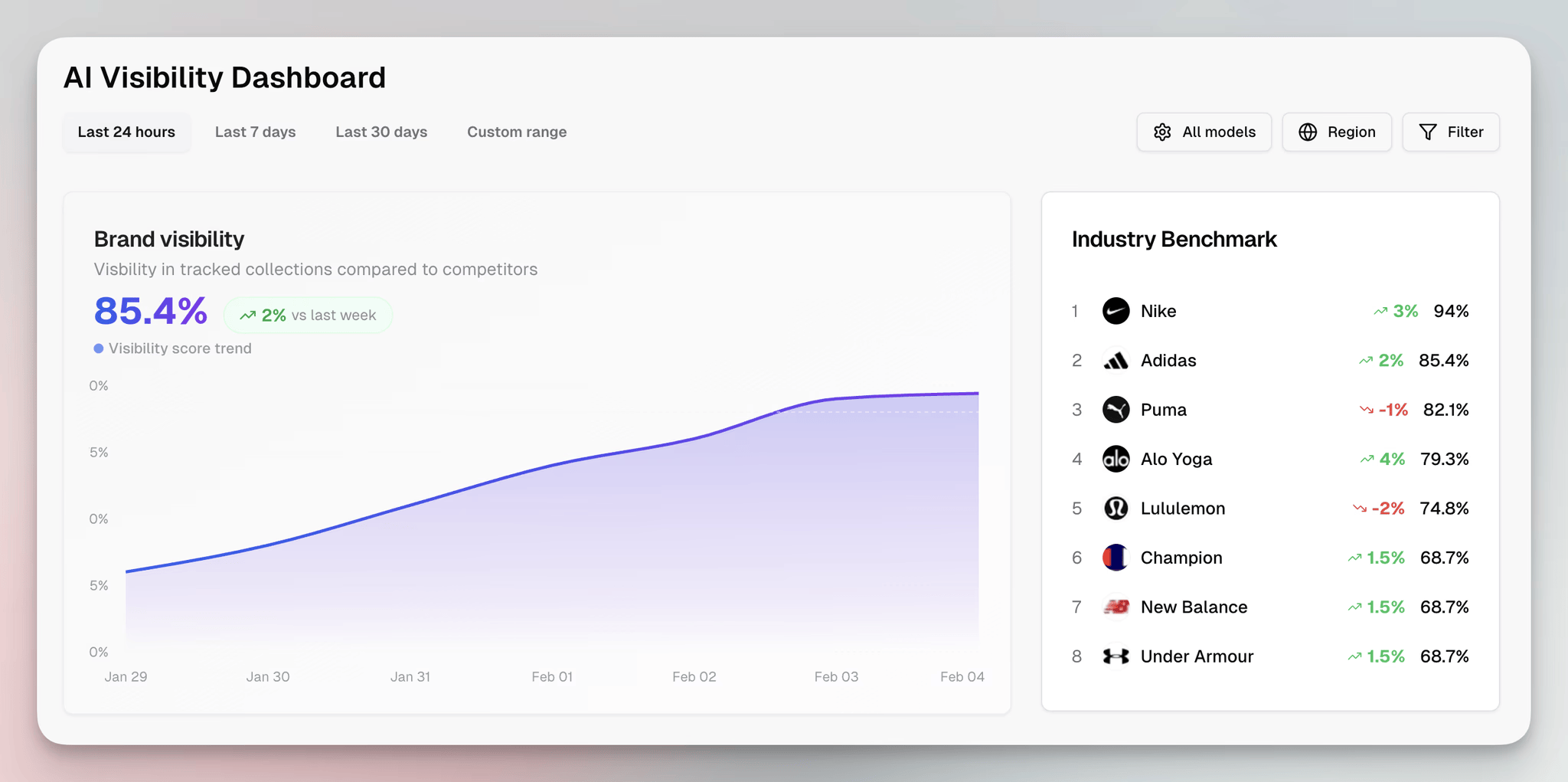
Erlin tracks brand visibility across ChatGPT, Perplexity, Gemini, and Claude, and goes a step further than most monitoring tools: it tells you what to do about what it finds.
The platform is built around three pillars: Insights, Opportunities, and Actions. The Insights layer shows where you appear, how often, and what sentiment AI platforms carry about your brand.
The Opportunities layer surfaces the specific prompts and content gaps where competitors are winning. The Actions layer converts those gaps into prioritised, executable tasks using Erlin's proprietary Fire Score, which ranks opportunities by their expected citation impact based on data from 500+ tracked brands.
What separates Erlin from most tools at this price point is the quality of the benchmark data behind those recommendations. The Fire Score is grounded in 180-day continuous monitoring across 500+ brands, not generic content advice.
When Erlin tells you to add FAQ schema or improve fact density, it's telling you because those specific changes have moved citations across a large dataset.
Brands with 8+ structured attributes get cited 4.3x more than brands with fewer than 3. (Erlin data, 2026) Erlin's action recommendations are built around exactly that kind of finding.
The platform also integrates with Google Analytics 4, Search Console, Shopify, and Slack. That means you can connect AI referral traffic to revenue attribution, which matters when you need to defend the investment to finance.
AI traffic converts 3x better than traditional organic search. (Erlin client data, 2026) Having the data to show that in a dashboard, your CFO can read changes the conversation.
Platforms covered: ChatGPT, Perplexity, Gemini, Claude
Key features: Fire Score prioritisation, prompt coverage tracking, competitor benchmarking, AI Visibility Ladder framework, GA4 and Search Console integration, Slack alerts
Best for: Growth-stage and mid-market brands that want to move from insight to execution, not just collect data
Pricing: Standard $97/month, Pro $249/month, Enterprise custom
What to know: The platform's strength is the combination of monitoring depth and prioritised actions. For brands that want to run a full AEO programme rather than just track mentions, it's the strongest value per dollar in this comparison. The platform covers four engines at launch; teams needing 7+ engine coverage at the same price point should weigh this against Peec AI.
2. Profound: Best for Enterprise Teams with Large Budgets
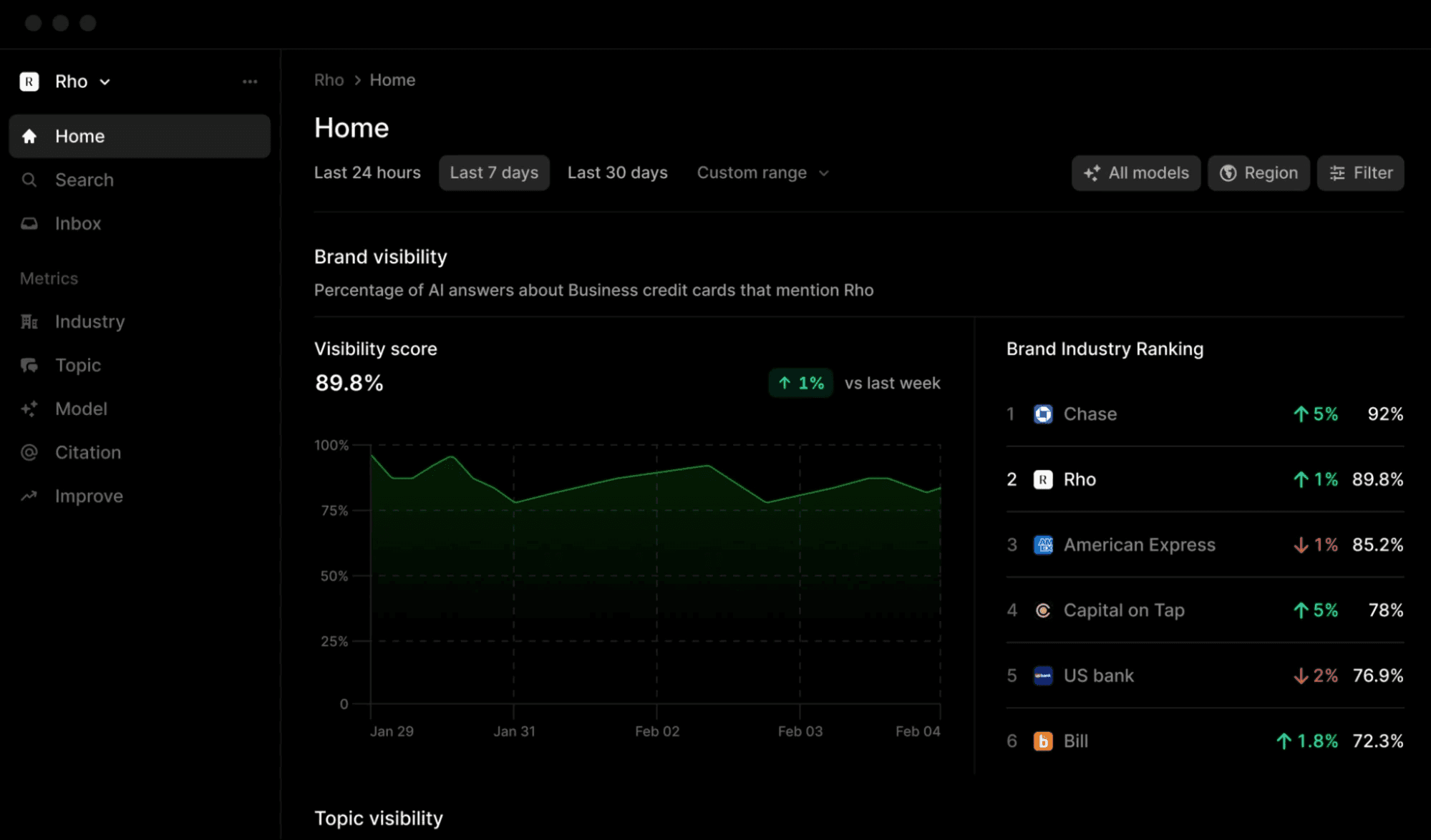
Profound is the most funded and most discussed platform in the AEO category. It has raised $58.5 million from Khosla Ventures, Kleiner Perkins, NVIDIA, and Sequoia, and its customer list, including Ramp, Figma, DocuSign, Zapier, US Bank, LG, Walmart, reflects genuine platform maturity at Fortune 500 scale.
The platform covers 10+ AI platforms on Enterprise plans, including ChatGPT, Perplexity, Google AI Overviews, Claude, Gemini, Grok, Copilot, Meta AI, and DeepSeek. Its standout differentiator is Prompt Volumes, a proprietary dataset that estimates actual search conversation volume on LLMs by topic.
No other tool in this comparison provides that data. It tells you not just whether a topic matters, but how much it matters in terms of real user queries.
The Opportunities panel takes that data and generates specific, named recommendations rather than generic content suggestions. The Agents feature then produces full article drafts, content briefs, and landing pages based on those opportunities, with integrations to push directly to WordPress, Sanity, Contentful, and Slack for review.
Ramp used Profound to achieve a 7x increase in AI brand mentions; the most-cited case study in the AEO category.
The limitations are real and worth stating clearly. The Growth plan at $399/month covers only three platforms. Full access to Claude, Gemini, Grok, and the rest of the engine stack requires Enterprise pricing, which runs $2,000 to $5,000+ per month.
There is no free trial and no self-serve signup. The interface is data-heavy and frequently described by G2 reviewers as requiring a dedicated analyst to navigate effectively. For teams without enterprise budgets or dedicated analytics resources, the platform creates more friction than it solves.
Platforms covered: 10+ on Enterprise (ChatGPT, Perplexity, Google AI Overviews on Growth; full stack on Enterprise)
Key features: Prompt Volumes panel data, Opportunities panel, Agents content generation, GA4 integration, SOC 2 Type II compliance, competitor benchmarking
Best for: Fortune 500 and large mid-market teams with dedicated analytics staff and AI visibility as a core budget line
Pricing: Growth $399/month (3 platforms, 100 prompts), Enterprise $2,000–$5,000+/month (custom)
What to know: Profound delivers the deepest analytics in the category. The effective entry price is $399/month, not the $99/month Starter; the Starter tracks only ChatGPT with 50 prompts, which is not enough to run a meaningful AEO programme. For teams without matching budgets, every other tool in this list offers more platform coverage for less money.
3. Peec AI: Best for Global Brands and Agencies
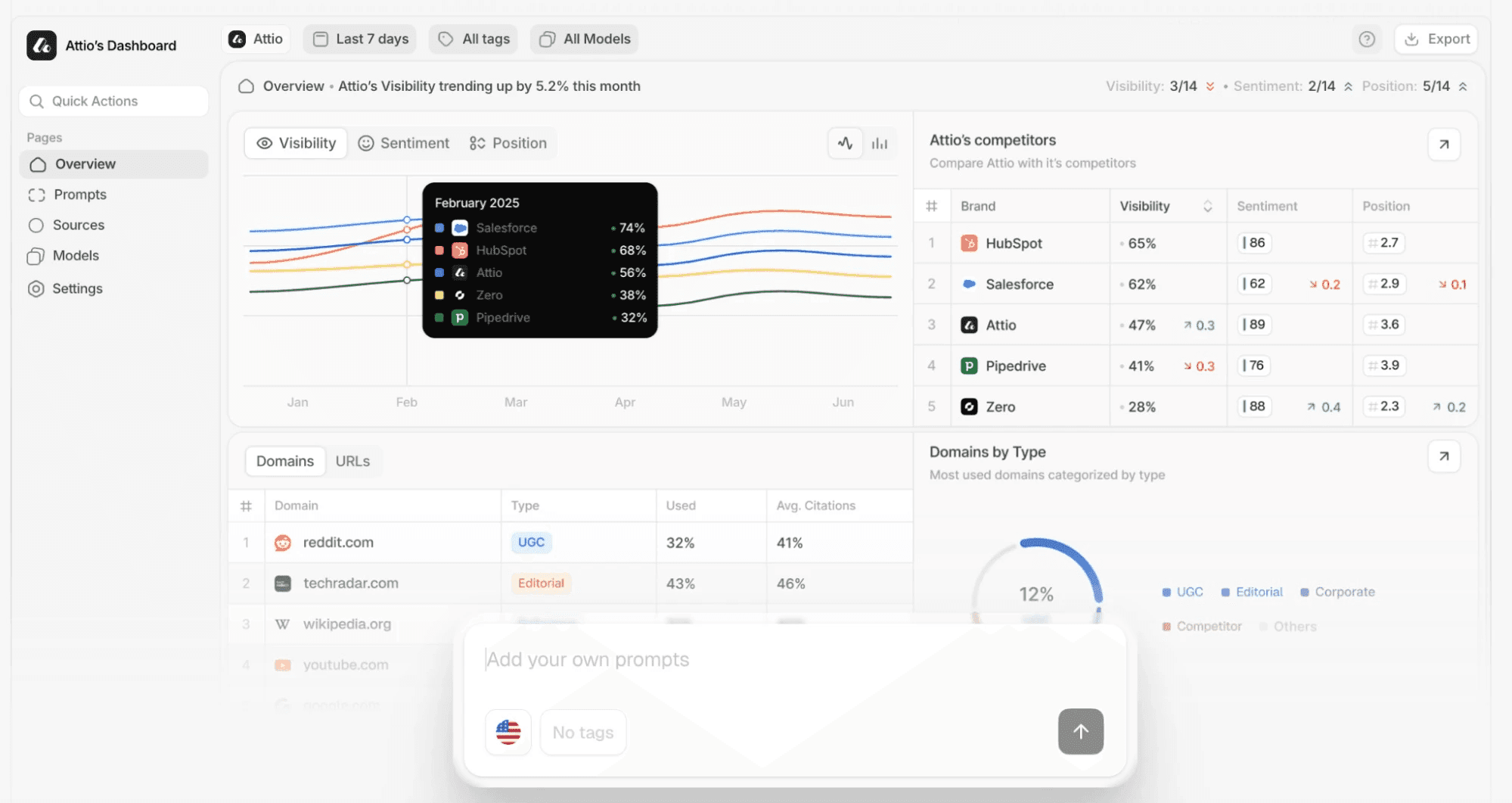
Peec AI was founded in 2022 by a team with ex-Google and DeepMind engineering backgrounds, raised €7 million within five months of launch, and is already trusted by 1,000+ marketing teams, including HUGO BOSS, Wix, ElevenLabs, and idealo.
Its standout strength is coverage breadth. Peec tracks brand performance across ChatGPT, Perplexity, Google AI Overviews, Gemini, Claude, Microsoft Copilot, Grok, DeepSeek, Llama, and Google AI Mode.
More importantly, it supports 115+ languages, which puts it in a different category entirely for global brands and agencies managing clients in non-English markets. No other tool in this comparison comes close to language coverage.
The platform distinguishes between explicit brand mentions and silent source citations, where a brand's content is synthesised in an AI response but the name isn't mentioned.
Share of Voice analytics break down results by platform and by prompt category, showing you who wins on ChatGPT versus who wins on Perplexity. The citation analysis layer identifies which external domains AI platforms are using as primary sources, which tells you exactly where to focus earned media investment.
Peec also includes an Actions system that delivers prioritised recommendations; the only mid-market tool in this comparison that bridges monitoring data and concrete next steps. Daily refresh keeps data current rather than weekly snapshots.
The pricing structure is worth examining carefully. The headline entry price is €89/month, but the base plan covers only three platforms. Claude and Gemini require add-ons.
Teams tracking four or more platforms will likely pay €150 or more before increasing prompt volume. The platform is also described by some users as less intuitive than Otterly on initial setup, with a steeper learning curve for the full feature set.
Platforms covered: 10 platforms (ChatGPT, Perplexity, Gemini, Claude, AI Overviews, AI Mode, Copilot, Grok, DeepSeek, Llama)
Key features: 115+ language support, Share of Voice analytics, citation source analysis, Actions system, competitive benchmarking, daily data refresh
Best for: Global brands, EU-centric operations needing GDPR compliance, and agencies managing international clients with multi-language reporting needs
Pricing: Starter €89/month (25 prompts), Pro €199/month (100 prompts), Enterprise €499+/month (300+ prompts); additional platforms require add-on fees
What to know: If your buyers ask questions in multiple languages or your agency manages non-English market clients, Peec is the only tool in this category that handles it without workarounds. Teams that only operate in English will find this specific advantage less relevant and may get better value elsewhere.
4. Otterly AI: Best for Small Teams Getting Started
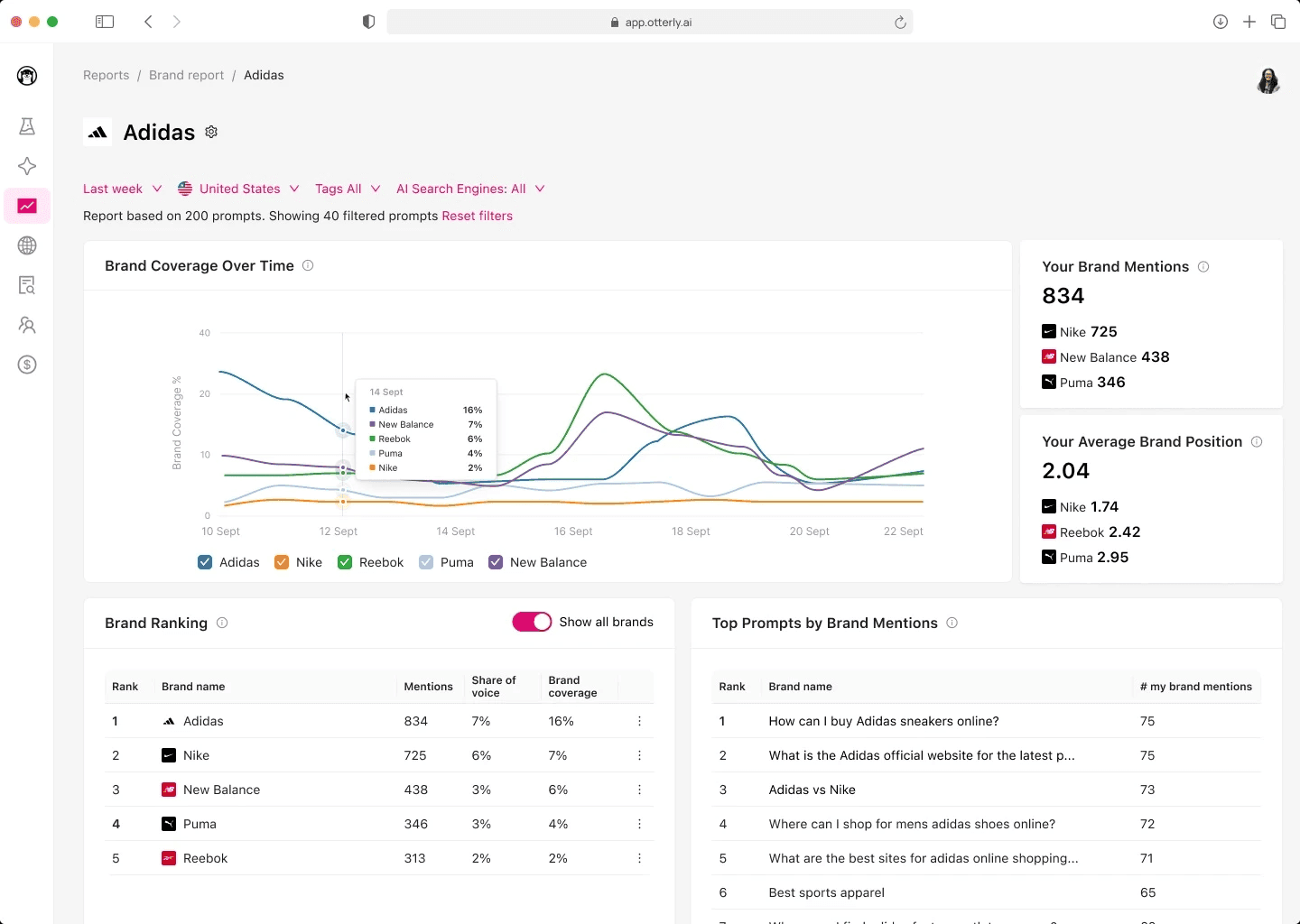
Otterly AI was designed for one purpose: getting brands into AI visibility monitoring as fast as possible, with as little friction as possible. Setup takes under 10 minutes from account creation to the first report. No code, no integrations, no configuration overhead.
The platform monitors ChatGPT, Perplexity, Google AI Overviews, Gemini, and Bing Copilot, covering five platforms at a $29/month entry price. That combination of breadth and affordability is genuinely hard to match at this price tier.
The GEO Audit feature evaluates a website's content and structure against 25+ factors to diagnose why AI models are citing or ignoring it; the most actionable starting-point diagnostic in the comparison.
Otterly also converts existing keyword lists into conversational prompts that reflect how real users interact with AI tools, which helps teams that are transitioning from traditional SEO get traction quickly without rebuilding their entire strategy from scratch.
The tradeoffs are transparency, not criticism. Otterly is a monitoring and alerting tool. It tracks mentions and surfaces shifts in visibility. Teams that need to understand why a competitor appears for specific prompts, or who need to run deep competitive gap analysis, will find the research functionality limited compared to Peec AI or Erlin.
The platform is also refreshed on weekly cycles rather than daily, which means short-term volatility in AI responses can go undetected between updates.
For teams at the beginning of their AI visibility journey, or agencies that need a lightweight starting point before recommending a larger investment to clients, Otterly delivers real value at a price point that removes the budget barrier entirely.
Platforms covered: ChatGPT, Perplexity, Google AI Overviews, Gemini, Bing Copilot
Key features: GEO Audit (25+ factors), keyword-to-prompt conversion, brand mention tracking, competitor monitoring, clean visibility index dashboard
Best for: Startups, solo founders, small marketing teams, and agencies needing a quick, low-cost baseline before scaling to more powerful tools
Pricing: Lite $29/month (15 prompts), Standard $189/month (100 prompts), Premium $489/month (400 prompts); 14-day free trial on all plans
What to know: The $29 Lite plan is the lowest friction entry point in this comparison. For teams that need basic monitoring and can live with weekly data refreshes, it delivers meaningful value. For teams that need daily monitoring, deep competitive research, or multi-language support, the upgrade path to Peec AI or Erlin is a natural next step.
5. SE Ranking AI Tracker: Best for SEO Teams Bridging Traditional and AI Search
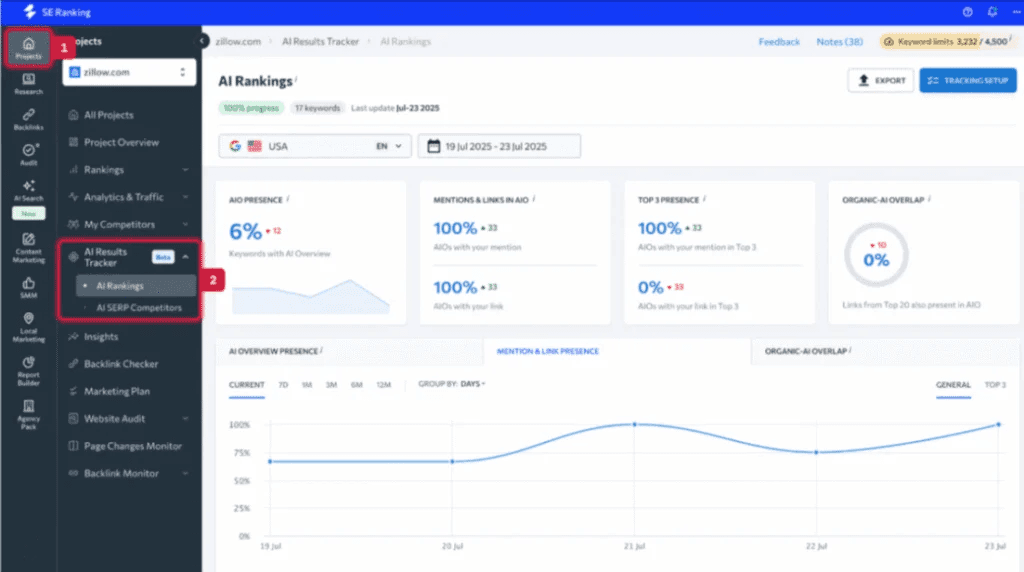
SE Ranking is an established SEO suite that added AI search tracking as a native module rather than a standalone product. That positioning matters: if you're already running traditional SEO workflows and want to add AI visibility tracking without onboarding a separate tool, SE Ranking is the cleanest integration path in this comparison.
The AI Tracker monitors brand mentions, citations, and positioning within AI-generated answers across ChatGPT, Perplexity, Google AI Overviews, and AI Mode. The platform provides competitor benchmarks within AI answers and prompts, and topic insights that show what questions your audience is asking AI tools.
Sentiment analysis flags how AI platforms are characterising your brand (positive, neutral, or negative), which matters for reputation monitoring as much as visibility tracking.
Because SE Ranking is a full SEO suite, the AI tracking data sits alongside keyword research, rank tracking, backlink analysis, and site auditing tools in the same dashboard.
For teams managing a traditional SEO programme and an AI visibility programme simultaneously, that consolidation reduces context switching and reporting overhead.
The limitation is specialisation. SE Ranking's AI coverage is narrower than dedicated tools; four platforms versus Peec AI's ten. Teams that need deep LLM monitoring, prompt-level research, or multi-language tracking will find the dedicated tools in this list more capable.
SE Ranking is strongest for teams where AI tracking supplements an existing SEO workflow rather than anchors an independent AEO programme.
Platforms covered: ChatGPT, Perplexity, Google AI Overviews, Google AI Mode
Key features: AI brand mention tracking, sentiment analysis, competitor benchmarking in AI answers, prompt and topic insights, integrated with full SEO suite (rank tracking, keyword research, backlink analysis, site audit)
Best for: In-house SEO teams and agencies already using SE Ranking that want to add AI visibility monitoring without managing a separate tool
Pricing: AI Tracker available as an add-on to SE Ranking base plans (starting ~$65/month for base + AI add-on); full plans from $65/month
What to know: The value proposition is consolidation, not depth. If your team doesn't already use SE Ranking or a similar suite, there are better dedicated options for AI monitoring. If you do, the native integration saves time and reduces tool sprawl without sacrificing the core tracking capability.
How to Choose: A Decision Framework
The right tool depends on where you are in your AI visibility journey and what you need to do next.
Start with Otterly if: You're new to AI visibility monitoring, your budget is under $50/month, and you need to get baseline data without setup friction. It's the lowest-risk starting point in this comparison.
Start with Erlin if: You want monitoring and prioritised actions in the same platform, and you need to show attribution from AI traffic to revenue. The Fire Score prioritisation and GA4 integration make it the strongest option for growth brands that want to move from data to execution.
Choose Peec AI if: You operate in multiple languages, manage international clients, or need 7+ engine coverage at a mid-market price. No other tool in this comparison matches Peec's language depth or breadth of AI platform coverage outside of Profound's enterprise tier.
Choose Profound if: You're at a Fortune 500 or large enterprise, you need SOC 2 Type II compliance for procurement, and you have the budget for $2,000+/month and a dedicated analyst to navigate the platform. The Prompt Volumes data and Agents content engine are genuinely unique differentiators at that scale.
Choose SE Ranking if: Your team already runs on SE Ranking or a similar all-in-one SEO suite, and you want to add AI monitoring without adding a new tool to your stack.
Frequently Asked Questions
What is an AI search monitoring tool?
An AI search monitoring tool tracks how your brand appears inside AI-generated responses from platforms like ChatGPT, Perplexity, Gemini, Claude, and Google AI Overviews. It measures how often your brand is cited, what sentiment AI platforms carry about you, which sources they reference when discussing your category, and how your visibility compares to competitors. It gives marketing teams the equivalent of Google Search Console, but for AI answers instead of blue links.
How is AI search monitoring different from traditional SEO tracking?
Traditional SEO tracking measures keyword rankings and organic click-through rates from search engine result pages. AI search monitoring measures whether your brand is cited in conversational responses, how accurately it's described, and where it appears relative to competitors in AI-generated answers. AI doesn't rank pages in order. It selects brands based on fact density, source authority, structured data, and content freshness. 68% of AI citations come from third-party sources, not brand-owned websites. (Erlin data, 2026) Traditional SEO tools don't capture any of this.
How many AI platforms should a monitoring tool cover?
At minimum, a tool should cover ChatGPT, Google AI Overviews, and Perplexity: the three platforms that drive the largest share of AI search traffic. Claude and Gemini add meaningful coverage for categories where buyers are research-intensive. Teams operating globally or in competitive categories where all five major platforms matter should look at tools like Peec AI or Profound that track 7–10 engines.
How often should AI search data be refreshed?
Daily refresh is the standard worth targeting. AI platforms update their responses constantly based on new content, source changes, and model updates. Weekly snapshots can miss short-term shifts that compound into larger visibility gaps over time. Brands not monitoring detect AI errors in 67 days on average, versus 14 days for monitored brands. (Erlin data, 500+ brands, 2026) Daily monitoring closes that gap.
What should I track with an AI search monitoring tool?
Start with these five metrics: prompt coverage (how many relevant queries your brand surfaces in), share of voice (your visibility versus competitors across those prompts), citation sources (which third-party domains AI is using when it discusses your category), sentiment (how AI characterises your brand), and error rate (whether AI is misrepresenting your pricing, features, or positioning). Most tools in this comparison cover all five. Where they differ is in how actionable they make the data after you collect it.
The Bottom Line
AI search monitoring is the new baseline for brand visibility strategy. 44% of AI search users now use it as their primary source for product discovery. (McKinsey, October 2025) Traditional SEO tracking doesn't capture what's happening in those conversations.
The five tools reviewed here cover the full range of use cases: Otterly for teams getting started, Erlin for growth brands that want monitoring plus action, Peec AI for global and agency use cases, Profound for Fortune 500 teams with enterprise budgets, and SE Ranking for SEO teams that want integration over specialisation.
Start where your budget and current strategy align. The priority is getting monitoring in place before the gap between you and your competitors widens further.
Share
Related Posts
Generative Engine Optimization Trends for 2026
7 GEO trends reshaping AI search visibility in 2026, with data on citations, structured data, and what actually drives brand coverage.
15 Generative Engine Optimization Best Practices Backed by Latest Research
Generative engine optimization best practices backed by 2026 research. 15 tactics to get your brand cited by ChatGPT, Perplexity, and Google AI Overviews.
AI for Content Planning & Strategy: A Complete Guide
AI for content planning in 2026 means planning for AI search visibility, not just faster drafts. Five-layer workflow, what to automate, what stays human.