The best SaaS SEO tools cover five jobs: keyword research, technical audits, content optimization, rank tracking and AI visibility. The eight covered here are Erlin for AI visibility, Ahrefs for backlinks and competitive research, Semrush as an all-in-one suite, Surfer SEO and Clearscope for content, Google Search Console as the free starting point, Screaming Frog for technical audits and SE Ranking as a lower-cost option.
Organic search is the highest-ROI acquisition channel in SaaS. B2B SaaS companies that invest in SEO report an average 702% ROI with a break-even period of seven months, and organic search generates 44.6% of all B2B revenue. (First Page Sage, 2026)
But picking the right tools matters. The SaaS buyer journey is long. Buyers research for weeks before ever speaking to sales, consuming comparison pages, integration docs, and feature breakdowns along the way.
Your SEO stack has to work at every stage of that journey, from capturing early awareness to locking in high-intent purchase queries.
This article covers the best SaaS SEO tools in 2026, what each one does well, where each falls short, and which tool fits which type of SaaS team.
Why SaaS SEO is different from regular SEO
SaaS buyers do not convert in one visit. They compare your product against three competitors, search for "[your product] vs [rival]," look for integration compatibility, and check review platforms before ever clicking "Start Free Trial."
That means your SEO stack has to do more than track keyword rankings. It has to surface competitor gaps, attribute organic traffic to trial signups and MRR, and now, in 2026, monitor your brand's presence in AI answer engines.
AI answer engines like ChatGPT, Perplexity, and Google AI Overviews now handle 40% of SaaS research queries. Traditional rank tracking misses this traffic entirely because these platforms do not show blue links.
Only 15% of the top 500 SaaS domains appear inside AI Overviews, up from just 4% at the end of 2023. SaaS companies that get in front of this shift now will compound their advantage. Those who don't will discover the gap later, when it's harder to close.
A complete SaaS SEO stack covers five jobs:
- Keyword and competitive research
- Technical SEO auditing
- Content optimization
- Rank tracking and reporting
- AI visibility monitoring
Most tools cover one or two of these well. A few cover more. The best stack for your team depends on where your biggest growth lever is right now.
The best SaaS SEO tools in 2026: comparison table
| Tool | Best For |
|---|---|
| Erlin | AI visibility monitoring and brand citation tracking across LLMs |
| Ahrefs | Backlink analysis and competitive keyword research |
| Semrush | All-in-one SEO suite with PPC and content tools |
| Surfer SEO | On-page content optimization and scoring |
| Google Search Console | Free first-party ranking and indexation data |
| Screaming Frog | Technical SEO audits and site crawling |
| SE Ranking | Mid-market teams needing AI Overviews tracking at a lower cost |
| Clearscope | Content teams optimizing for semantic depth |
Erlin: best for AI visibility monitoring and brand citation tracking
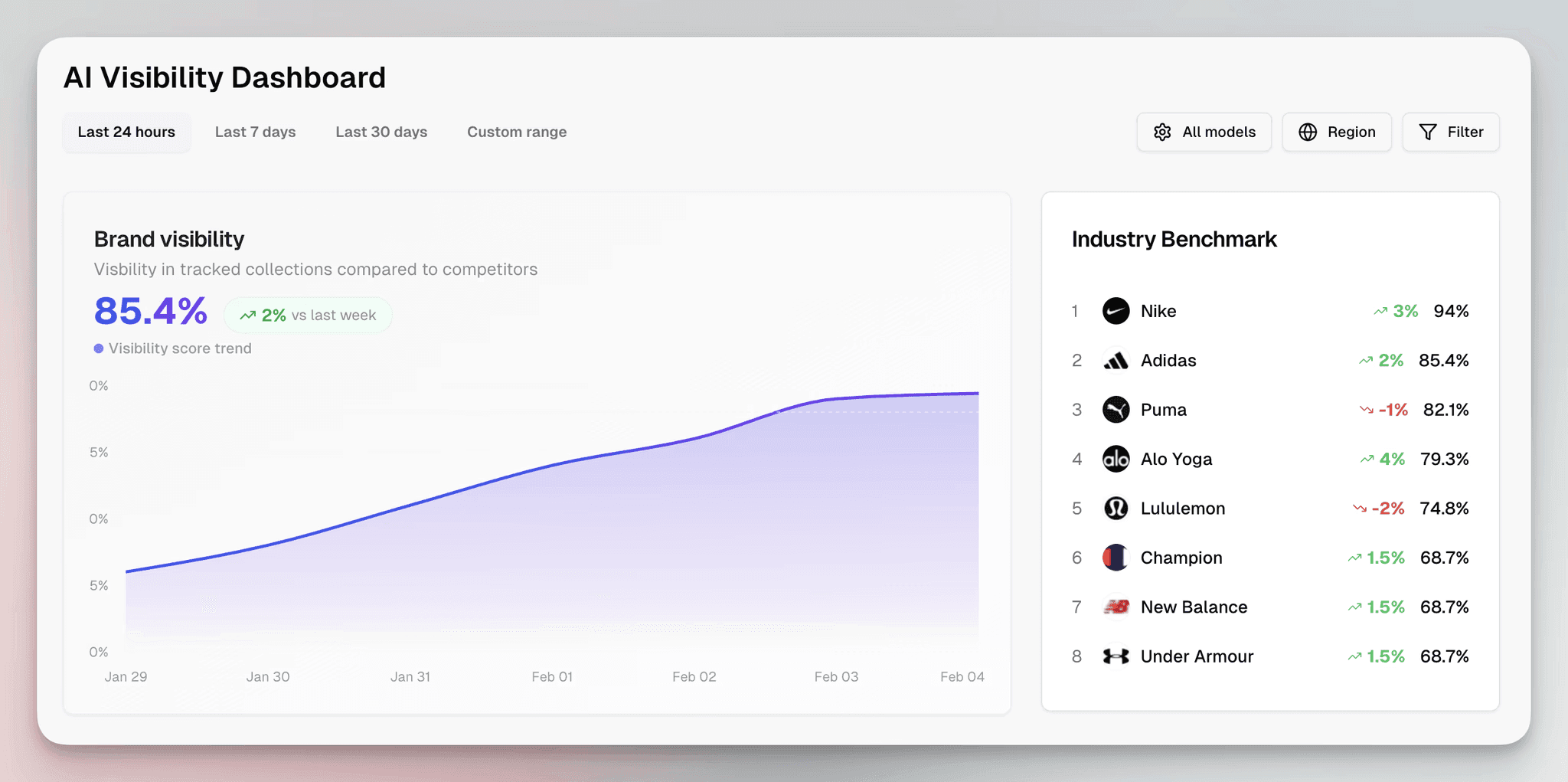
Traditional SEO tools cover search demand well. But in 2026, traditional SEO alone leaves a growing gap. More SaaS buyers are starting their research in ChatGPT, Perplexity, Gemini, and Claude, asking those platforms directly which tools to consider. What gets said about your brand in those answers determines whether you're in the consideration set, before a buyer ever visits Google.
Erlin is built specifically to track and improve that visibility. Its platform monitors how your brand appears across the four major AI platforms, what facts are cited about you, which competitors get recommended instead, and where your prompt coverage has gaps.
The data is concrete. Brands with 8+ structured attributes get cited 4.3x more than brands with fewer than 3 attributes. (Erlin data, 500+ brands, 2026) Only 16% of brands currently track AI search performance, which means the window to build a visibility advantage before the market consolidates is still open. (Erlin data, 2026)
Erlin's AI Visibility Ladder benchmarks your brand across five tiers: AI Invisible (0 to 15% coverage), AI Fragile (15 to 35%), AI Present (35 to 60%), AI Preferred (60 to 80%), and AI Dominant (80%+). 50% of brands currently score below 35% prompt coverage across the four major platforms. (Erlin data, 2026)
The platform shows you which specific gaps are suppressing your coverage, missing structured data, stale content, low third-party source diversity, and surfaces the actions with the highest impact. Its "human in the loop" model means AI does the monitoring and surfaces opportunities; your team makes the decisions.
Where Erlin does well: AI citation tracking across ChatGPT, Perplexity, Claude, Google AI Mode, Gemini, and Copilot; prompt coverage measurement; AI Visibility Ladder scoring; competitive displacement alerts; AI error detection (monitored brands detect errors in 14 days vs 67 days for unmonitored brands). (Erlin data, 2026)
Where it falls short: Erlin is an AI visibility platform, not a traditional SEO suite. It doesn't replace Ahrefs for backlink research or Surfer for content scoring. It works best as the AI visibility layer on top of a traditional SEO stack.
Best for: SaaS CMOs and growth teams who need to know what AI platforms say about their brand, and want to improve it.
Ahrefs: best for backlink analysis and competitive research
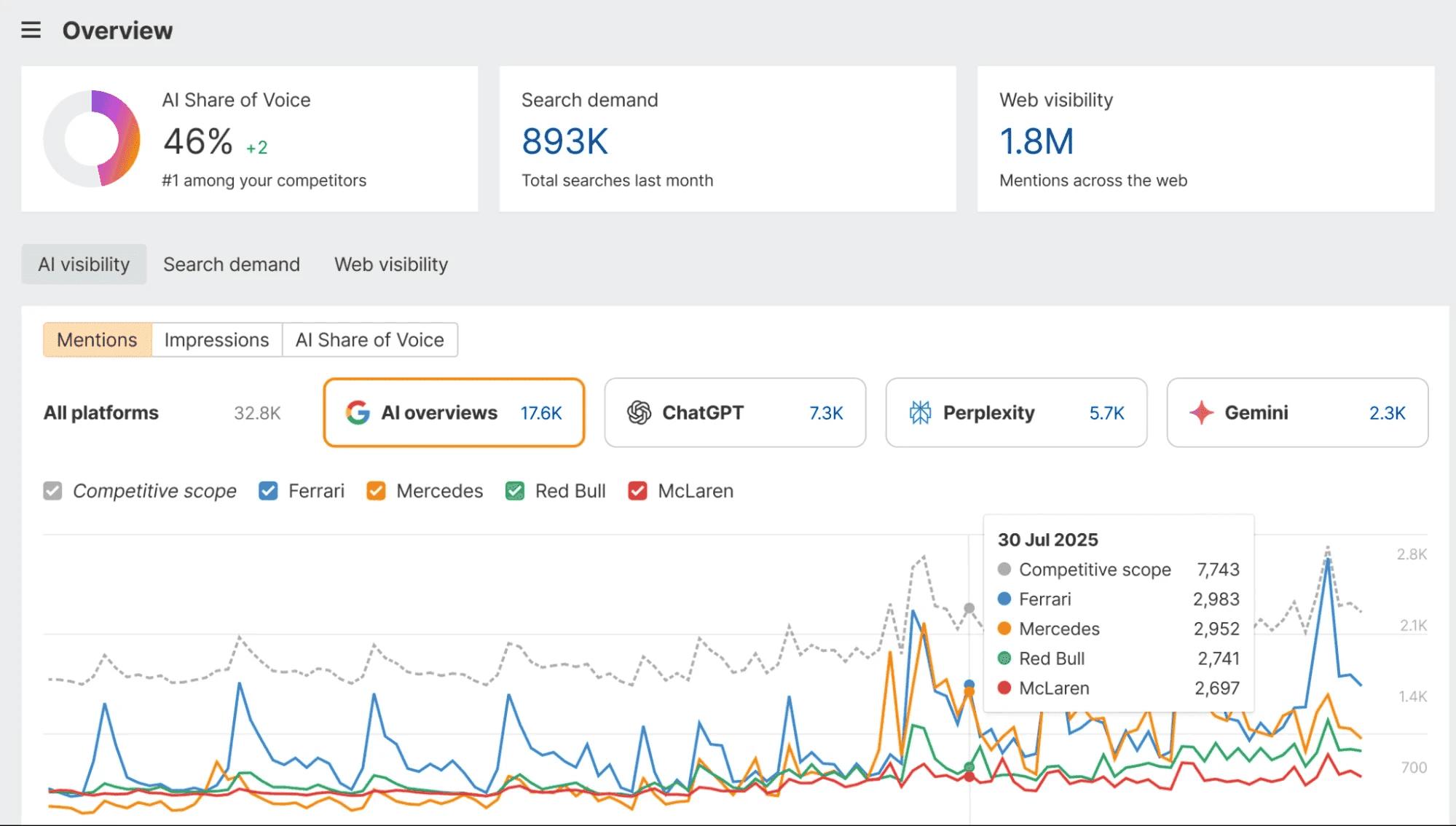
Ahrefs is the gold standard for competitive intelligence. Its backlink index covers 35 trillion links from 500 million referring domains, and its crawler processes approximately 8 billion pages daily. For SaaS teams trying to understand why a competitor ranks for a high-value keyword, no tool gives you a clearer picture.
Ahrefs holds a 14.83% market share in the SEO/SEM category. Its Keyword Explorer shows search volume, keyword difficulty, traffic potential, and the number of clicks a ranking would generate, factoring in SERP features that steal clicks before users reach blue links.
For SaaS companies, the Content Gap feature is particularly useful. You can compare your domain against two or three competitors and identify every high-volume keyword they rank for that you don't. That becomes your content roadmap.
Where Ahrefs does well: Backlink data accuracy, competitor keyword gap analysis, clean interface for non-SEO users.
Where it falls short: Usage-based pricing on higher plans draws regular criticism from power users. Its AI visibility tracking (via Brand Radar) shows brand-level share of voice across platforms but lacks the prompt-level tracking that dedicated AI visibility tools provide. Content optimization and rank tracking are solid, but not as deep as specialized tools.
Pricing: Starts at $99/month (Lite plan).
Semrush: best all-in-one suite for growth teams
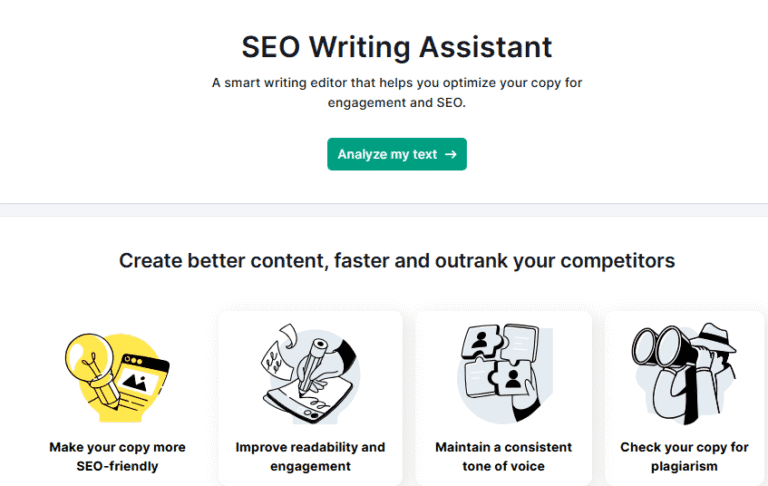
Semrush covers more ground than any other tool on this list. Beyond SEO, it handles PPC keyword research, social media scheduling, content marketing, and competitor benchmarking. For SaaS growth teams running multi-channel campaigns and needing one platform to report across all of them, Semrush consolidates what would otherwise require three or four separate subscriptions.
The 2026 update introduced Semrush One, which tracks brand visibility across AI assistants like ChatGPT, Perplexity, and Google Gemini, addressing the growing concern of AI-driven search traffic.
Its keyword database holds 27.9 billion keywords, and its AI-powered features include topical authority scoring, intent clustering, and personalized keyword difficulty scores calibrated to your domain. For SaaS teams building topic cluster strategies, the automatic keyword clustering saves hours of manual grouping.
Where Semrush does well: Breadth of features, keyword research depth, content marketing toolkit, and AI visibility tracking at the prompt level via its AI SEO Toolkit.
Where it falls short: Per-seat pricing adds up quickly as teams grow. The sheer number of features can overwhelm teams that only need keyword research and rank tracking. Data limits on basic plans are more restrictive than those of Ahrefs.
Pricing: Starts at $139.95/month (Pro plan).
Surfer SEO: best for content optimization
Surfer SEO does one thing and does it well: it tells you what your content needs to rank. Enter a keyword, and Surfer scans the top-ranking pages for that query, analyzing word count, heading structure, keyword density, entity coverage, and NLP patterns. It then gives your content a real-time score that updates as you write.
Studies have found that Surfer's use of Google's NLP APIs closely matches how Google ranks content, more so than other platforms.
For SaaS content teams publishing at volume, the Content Editor is the core workflow tool. Writers stay in the editor while optimizing for the score, and the suggested entities and semantic terms help produce content that covers the depth Google expects for competitive queries.
Where Surfer does well: Real-time content scoring, semantic entity coverage suggestions, SERP analysis, and a topical map for content planning.
Where it falls short: Surfer is not a standalone tool. It lacks competitive backlink data and deep keyword research, so most teams use it alongside Ahrefs or Semrush. Focusing too closely on hitting a high Content Score can lead to content that sounds robotic and feels over-optimized. The score is a guide, not a target.
Pricing: Starts at $99/month (Essential plan).
Google Search Console: best free starting point
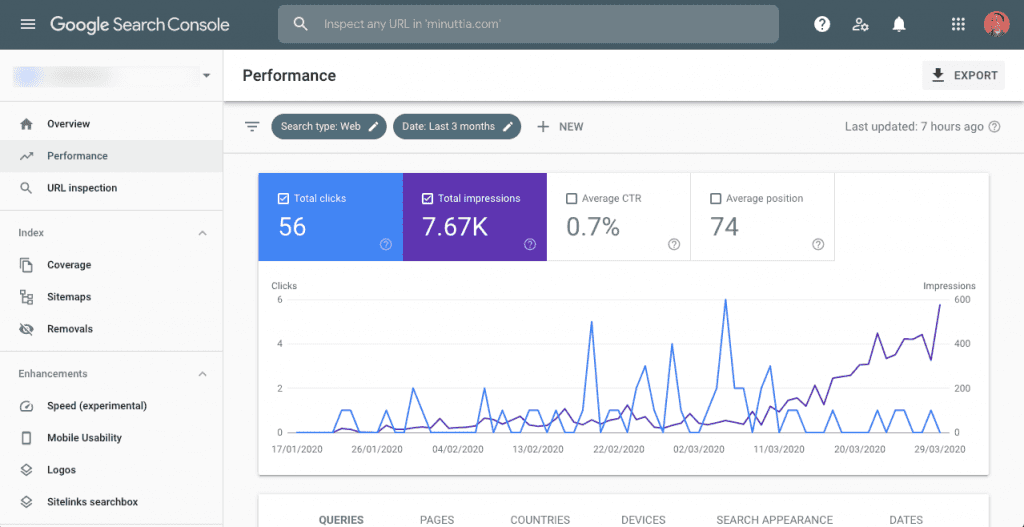
Google Search Console is the one tool every SaaS company should use before paying for anything else. It provides first-party data directly from Google: exactly which queries are driving impressions and clicks, which pages are indexed, Core Web Vitals scores, and which URLs have crawl or indexation issues.
The "striking distance" opportunity is the most underused feature for SaaS teams. Filter for queries where you rank between positions 8 and 20. Those pages are visible but not clicked. A title tag update, a better meta description, or adding an FAQ section can move them to page one without writing a single new word.
Organic search drives approximately 53% of total SaaS website visits in 2025, making it the most cost-efficient growth channel. GSC tells you precisely how that 53% is distributed across your content.
Where it does well: Free, first-party data, Core Web Vitals monitoring, indexation status, no sampling.
Where it falls short: No competitor data, limited to 16 months of history, and no keyword difficulty or volume estimates. Works best as a data input to a broader research workflow.
Pricing: Free.
Screaming Frog: best for technical SEO audits
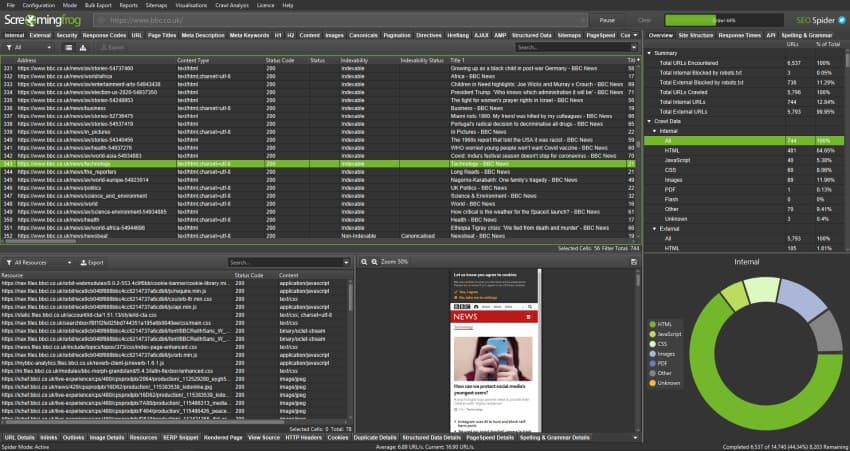
SaaS products grow fast. Feature pages, integration docs, changelog entries, and help center articles accumulate quickly. Screaming Frog crawls your site exactly the way Googlebot does, surfacing broken redirects, missing tags, duplicate content, slow page speeds, and indexation issues before they compound into ranking problems.
For SaaS companies with JavaScript-heavy frontends, Screaming Frog's JavaScript rendering mode is critical. Standard crawlers miss content rendered by JavaScript. Screaming Frog sees it.
The tool is desktop-based, which makes it less convenient than cloud platforms but faster for large crawls. Most SaaS teams run a full audit quarterly and a lighter crawl after major product updates or CMS migrations.
Where it does well: Deep technical auditing, JavaScript rendering, custom extraction, and schema validation.
Where it falls short: No backlink data, no keyword research. It surfaces problems but doesn't prioritize which to fix first for maximum SEO impact. The learning curve is steeper than that of cloud-based tools.
Pricing: Free up to 500 URLs. Paid version at £259/year for unlimited crawls.
SE Ranking: best mid-market alternative for AI Overviews tracking
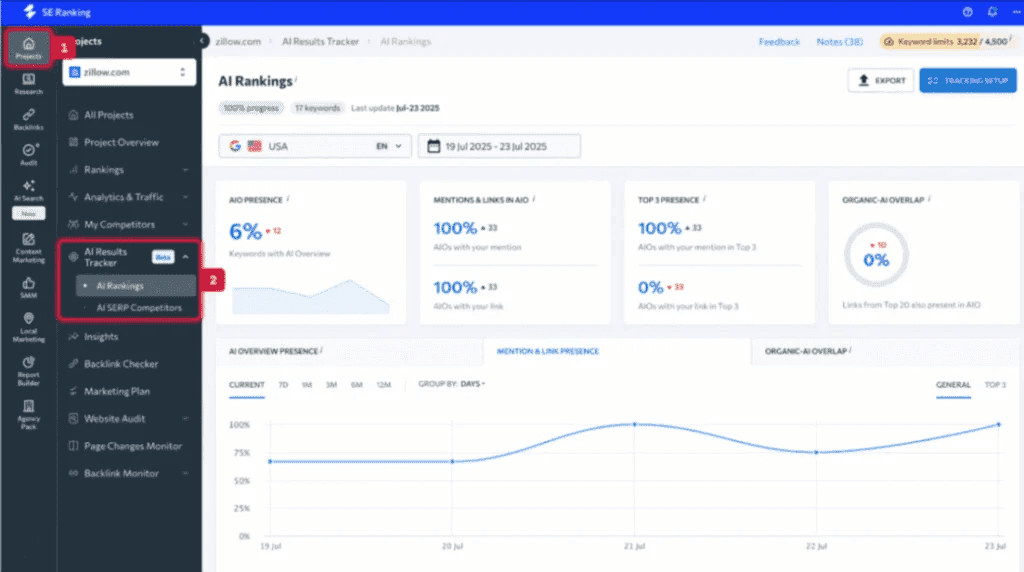
SE Ranking sits between the enterprise price points of Semrush and Ahrefs and the lower-feature free alternatives. It covers keyword research, rank tracking, site audits, backlink analysis, and competitor monitoring at a significantly lower cost.
SE Ranking stands out for its AI Overviews Tracker, showcasing how visible your site is in Google's AI-generated answers. Unlike most platforms, SE Ranking includes this feature in its basic plan at no extra cost.
For SaaS teams with limited budgets that still need to track AI search visibility alongside traditional rankings, SE Ranking delivers that in a single subscription. Its interface is clean and accessible for non-SEO marketers.
Where it does well: Cost-effectiveness, AI Overviews visibility tracking, white-label reporting for agencies, and daily rank tracking.
Where it falls short: The backlink database is smaller than Ahrefs or Semrush. Keyword data is less granular, and the content optimization features don't match the depth of Surfer or Clearscope.
Pricing: Starts at $65/month.
Clearscope: best for semantic depth and editorial quality
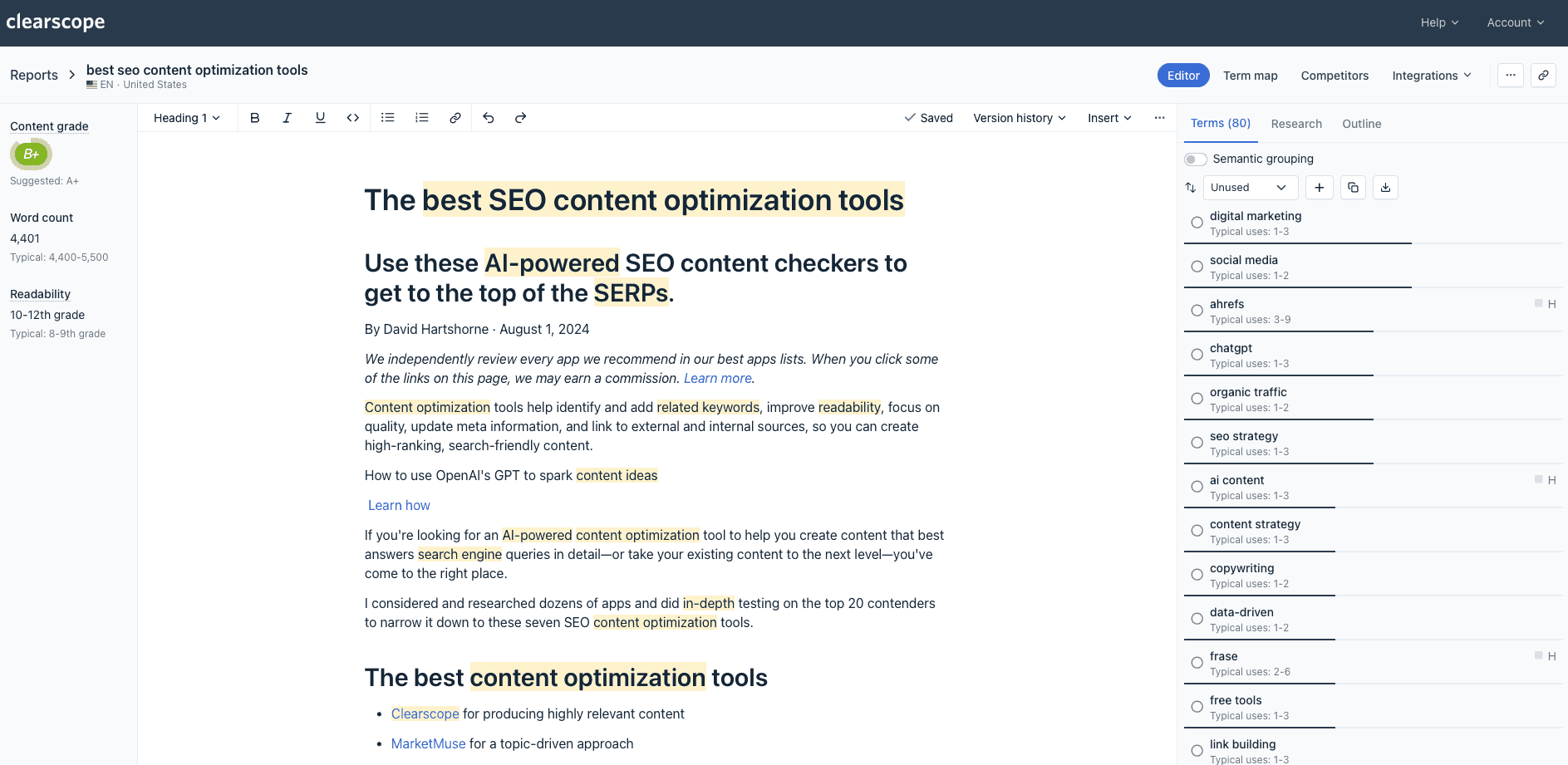
Clearscope uses IBM Watson NLP to analyze what content ranks well for a given keyword and surfaces the semantic terms and entities your content should include. It focuses on quality over quantity, nudging writers toward covering concepts rather than stuffing keywords.
For SaaS companies building thought leadership content or targeting informational queries with genuine depth, Clearscope helps produce articles that cover a topic the way Google expects it to be covered. It pairs well with a senior editorial workflow.
Where it does well: Semantic content recommendations, editorial quality focus, and a clean editor experience.
Where it falls short: Premium pricing puts it out of reach for smaller teams. It lacks rank tracking, backlink data, and standalone keyword research. It's a content depth tool, not a full SEO platform.
Pricing: Starts at $189/month.
How to build a SaaS SEO stack that actually scales
Most SaaS teams don't need every tool on this list. The right stack depends on where you are in your growth stage and where your biggest gap is.
Pre-seed to Seed ($0 to $1M ARR): Start with Google Search Console (free) and SE Ranking. You get keyword research, rank tracking, site audits, and AI Overviews monitoring without the enterprise price tag. Add Screaming Frog for quarterly technical audits.
Series A ($1M to $10M ARR): Add Ahrefs or Semrush for competitive intelligence and backlink research. Add Erlin to monitor your AI search presence before competitors lock in the category. Add Surfer SEO when content production ramps up.
Series B and beyond ($10M+ ARR): The full stack applies. Semrush or Ahrefs for core research, Surfer or Clearscope for content depth, Screaming Frog for technical health, and Erlin for AI visibility. At this stage, the gap between teams with structured AI visibility strategies and those without is measurable in pipeline.
AI-driven referrals tend to convert better than organic search. Building that traffic channel now, while competition for AI citations is still low, is the highest-leverage SEO move available to SaaS teams in 2026.
Start by checking your AI visibility
Most SaaS companies have significant room to improve their AI search presence. 50% of brands score below 35% prompt coverage across the four major AI platforms, and only 16% track it at all. (Erlin data, 2026)
See where your brand stands in AI search, where competitors are pulling ahead, and which gaps have the highest impact to close first.