ChatGPT search optimization means getting your pages retrieved and then selected, since an AirOps study found ChatGPT cites only 15% of the pages it retrieves. Get indexed in Bing, allow OAI-SearchBot, answer each section's question in its first sentences, add FAQ schema and specific data, refresh content regularly, and build third-party presence on review platforms, Reddit and LinkedIn.
ChatGPT is changing how users discover information, and most content still isn’t built for it. Ranking on Google no longer guarantees visibility when answers are generated and cited inside ChatGPT.
This guide breaks down how ChatGPT retrieves and selects sources in 2026, why many pages never get cited, and the structural, technical, and off-page changes that consistently drive citation visibility.
How ChatGPT retrieves and cites content
ChatGPT Search does not present a ranked list of pages. It generates a synthesized answer by pulling candidate pages from the web, evaluating them, and selecting which sources to quote or paraphrase. The distinction between retrieval and citation is the most important thing to understand about ChatGPT optimization in 2026.
An AirOps study analyzing 548,534 pages across 15,000 prompts found that ChatGPT cites only 15% of the pages it retrieves. The other 85% are pulled into the process, evaluated, and discarded without ever appearing in the answer. (AirOps, March 2026)
This creates two separate optimization problems. The first is discoverability: your pages need to enter the retrieval pool. The second is selectability: your content needs to survive the cut. Most ChatGPT optimization advice focuses entirely on the first problem. The second is where most brands lose.
ChatGPT Search is powered by Bing's index for real-time web retrieval. One study found that ChatGPT search results share 73% overlap with Bing's results. If your site is not indexed in Bing, it will not appear in ChatGPT responses, regardless of how well it ranks on Google.
Submit your sitemap to Bing Webmaster Tools and ensure your robots.txt allows OAI-SearchBot access. Without that foundation, the rest of this guide does not apply
What actually drives ChatGPT citations in 2026
Research from SE Ranking, AirOps, Authoritas, and Fortis Media published throughout 2025 and early 2026 converges on three primary citation drivers: content structure, domain authority, and content freshness.
Domain authority is a hard threshold
Sites with over 32,000 referring domains are 3.5x more likely to be cited by ChatGPT than sites with fewer than 200 referring domains. (SE Ranking, November 2025)
This creates what some researchers call an authority "trust cliff." In traditional Google search, a site with moderate authority could still rank for long-tail keywords if the content was directly relevant.
In ChatGPT, the model is risk-averse. It prefers sources it can confidently attribute, which means the link graph functions as a credibility signal rather than just a ranking factor.
The practical implication: domain authority matters more for entry into the citation pool than for selection within it. Once retrieved, mid-authority pages in the DA 40-80 range show citation rates comparable to higher-authority domains. High-DA sites get retrieved more frequently but are not selected at proportionally higher rates. (AirOps, March 2026)
Third-party review profiles amplify authority signals. Domains with active profiles on Trustpilot, G2, Capterra, or Yelp have 3x higher citation probability compared to sites without such presence. (SE Ranking, November 2025)
This is not a correlation researchers expected to find. It reflects how ChatGPT treats review platform presence as evidence that a brand is real, active, and verifiable.
Content structure determines whether you survive the cut
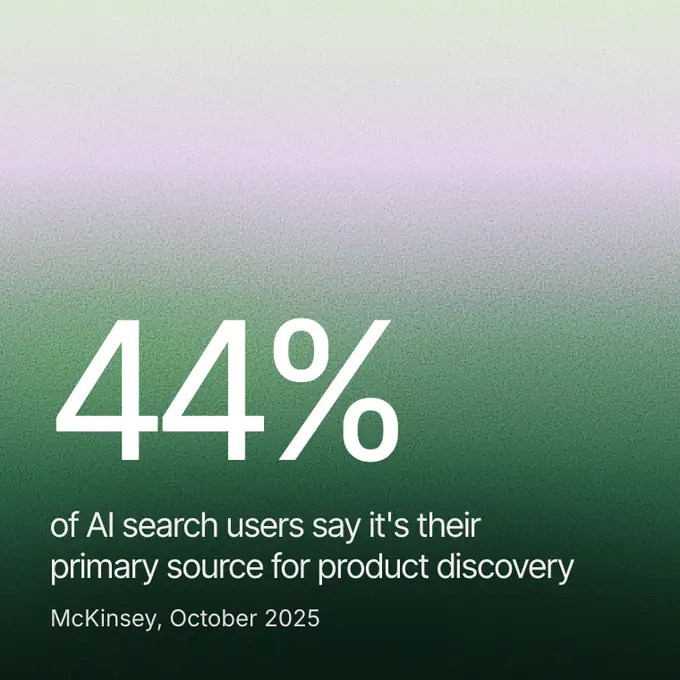
ChatGPT selects pages that present information in a format the model can extract cleanly. A large-scale analysis of pages found that 44% of ChatGPT citations come from the first third of each piece of content. If the answer to the query is not near the top of the section, the model will not wait for it. (Profound, February 2026)
Pages with FAQ schema and inline citations are weighted approximately 40% higher in ChatGPT source selection than pages without these elements. (Authoritas, 2025) Articles with 19 or more statistical data points average 5.4 citations. Articles with minimal data average 2.8. (SE Ranking analysis of 216,524 pages)
Content length matters, but not through volume alone. Articles over 2,900 words average 5.1 citations versus 3.2 for articles under 800 words. The stronger signal is section density: pages with 120-180 words between headings perform best, averaging 4.6 citations. Sections under 50 words average 2.7. (SE Ranking, November 2025)
Expert quotes double citation rates. Pages with attributed expert quotes average 4.1 citations versus 2.4 for those without. ChatGPT treats attributed analysis differently from generic claims, and the data shows it.
Content freshness has a measurable penalty
ChatGPT has a strong bias toward recently updated content. Content updated within 30 days receives 3.2x more citations than older material. (Lureon.ai research, 2025) Erlin's own tracking across 500+ brands confirms this: brands updating content monthly see ~23% higher AI coverage than those with stale content. (Erlin data, 2026)
The freshness signal is not about publication date alone. It is about whether the model finds evidence that the content reflects current conditions. This means refreshing statistics, updating examples, and adding a visible "Last updated" timestamp on priority pages. A 2023 article with new 2026 data performs differently from a 2023 article that has never been touched.
The fan-out problem nobody tracks
Here is a dimension of ChatGPT optimization most brands are missing entirely.
ChatGPT does not search just for the phrase a user types. It expands prompts into multiple sub-queries before assembling its answer, a process called fan-out. Across the AirOps dataset, 89.6% of the 15,000 original prompts triggered two or more follow-up searches. The total query set expanded from 15,000 prompts to 43,233 queries, nearly a 3x increase. (AirOps, March 2026)
What this means for brands: 32.9% of all cited pages appeared in fan-out results only, not the original prompt. They were never discovered through the primary keyword. Nearly one-third of citation opportunities exist entirely outside the tracking scope of a conventional keyword strategy.
The fan-out queries that triggered citations in the AirOps study had one striking characteristic: 95% of them had zero traditional search volume. These are not keywords brands target.
They are the sub-questions ChatGPT asks itself while building an answer, questions like "NCLEX pass rates by nursing school" when a user asked "what are the best nursing programs?" or "Search Engine Land award winners" when the user asked, "what are the best SEO agencies?"
The implication is direct. To capture the fan-out citation surface, your content needs to cover the supporting details behind your category, not just the headline claims. Pricing, methodology, technical specifications, case study evidence, accreditations, and comparative data. These are the details ChatGPT goes looking for, and they do not need search volume to drive citations.
Technical foundations for ChatGPT visibility
Getting the technical layer right is a prerequisite. Content quality cannot compensate for a site that ChatGPT cannot access or render.
Allow the right crawlers: Update your robots.txt to permit access for GPTBot (OpenAI), BingBot, CCBot, and ClaudeBot. Blocking these eliminates citation possibility while providing minimal protection, since AI models have already been trained on publicly available data.
Bing Webmaster Tools: Submit your sitemap directly. Because ChatGPT Search uses Bing's index as its primary real-time retrieval layer, Bing indexing is not optional. It takes ten minutes and is one of the highest-leverage actions available.
Page speed: Pages with First Contentful Paint under 0.4 seconds average 6.7 citations. Pages loading in over 1.13 seconds average 2.1. (AI Clicks, 2025) The 3x difference suggests ChatGPT's retrieval crawler has a timeout threshold that penalizes slow pages.
JavaScript-rendered content is particularly problematic: AI parsing success for static HTML with schema runs at 94%, while JavaScript-rendered content lands at 23%. (Erlin data, 2026)
IndexNow: This open protocol notifies Bing immediately when content changes. For fresh content to appear in ChatGPT responses quickly, use IndexNow to push updates rather than waiting for a standard crawl cycle.
Schema markup: Implement Article schema, FAQ schema, and Author schema at a minimum. Pages with 3 or more schema types have a 13% higher likelihood of being cited by LLMs. (2026 State of AI Search) For comparison pages, add Table schema. For how-to articles, add HowTo schema.
How to structure content for ChatGPT selection
The difference between a retrieved page and a cited page is structural. ChatGPT breaks documents into chunks of text and pulls the parts most relevant to the query being answered. If your content hides the answer under context, qualifications, or background, the model moves to the next source.
Answer first: Every H2 section should answer its implied question within the first one to two sentences. ChatGPT reads the first 40-60 words of each section and decides whether to cite it. A strong answer capsule at the start of each section is the single highest-leverage structural change most content teams can make.
Write declarative sentences: ChatGPT cites facts it can lift and attribute. Hedged claims and vague language get passed over. "Brands updating content monthly see 23% higher AI coverage" is citable. "Brands that update content tend to perform better in AI search" is not.
Use complete list items: ChatGPT extracts list items individually. Fragments are not citable. "Brands with 9+ structured facts achieve 78% average AI coverage" is a complete, extractable statement. "9+ structured facts" is not.
FAQ sections work: Every definition, explainer, and how-to article should include a FAQ section with H3 questions and self-contained answers of 2-5 sentences. These are the sections ChatGPT most frequently extracts to answer user queries. The heading for this section should be "Frequently Asked Questions" (exact phrasing) so it maps to FAQ schema correctly.
Comparison tables belong on every product and feature page: Erlin data shows comparison tables drive a +34% coverage lift in 14 days. (Erlin data, 2026) ChatGPT is actively looking for structured comparisons when users ask "what's the best X", so category comparison tables on your owned pages appear in fan-out queries even when users did not search for your brand specifically.
Off-page authority: where 68% of citations come from
Erlin's dataset is unambiguous on source distribution: 68% of AI citations come from third-party sources. Only 32% from brand-owned websites. (Erlin data, 2026)
This is the dimension most brands underinvest in. All the on-page optimization in the world cannot fully compensate for an off-page presence that does not exist or is not being maintained.
Reddit: Reddit is among the top-cited domains across ChatGPT and other AI platforms. Authentic Q&A threads that mention your brand or category in a helpful, non-promotional way get surfaced repeatedly.
An analysis of approximately 250,000 Reddit posts found that Q&A threads account for over 50% of Reddit AI citations. (Erlin data and third-party analysis, 2026)
The strategy is genuine participation, answering real questions in relevant subreddits, not promotional posting. ChatGPT's algorithm has become more resilient to manipulation attempts, and obvious promotion backfires.
LinkedIn: LinkedIn's domain rank on ChatGPT moved from approximately #11 to #5 between November 2025 and February 2026, representing over a 2x increase in citation frequency. (Profound, March 2026)
Long-form articles and LinkedIn posts are increasingly being surfaced alongside editorial sources. Publishing substantive, attributed analysis directly on LinkedIn has a measurable citation impact.
Review platforms: G2, Capterra, Trustpilot, and similar platforms now function as citation sources during answer generation. LLMs retrieve from these environments because they contain structured comparisons, user feedback, and feature-level breakdowns that help answer commercial intent queries. If your brand's profile is incomplete or your review count is low, this is a direct gap in your AI citation coverage.
Wikipedia: Wikipedia appears in nearly 1 in 6 ChatGPT conversations that contain citations. (Profound, October-December 2025) Brands with comprehensive Wikipedia articles achieved their first ChatGPT citations in an average of 28 days after implementing optimization strategies.
Brands without a Wikipedia presence took an average of 52 days. (Status Labs, 2026) The challenge is that Wikipedia's notability guidelines require significant independent coverage first, making this a medium-term play rather than a quick win.
Press coverage: PR Newswire, Forbes, and Medium were among the biggest winners in ChatGPT citation growth following late-2025 algorithm adjustments. (Semrush, November 2025) Published research, earned media, and industry analyst coverage contribute to the corroboration signals ChatGPT uses to assess brand authority.
How to measure ChatGPT search optimization
There is no ChatGPT Search Console. Measuring AI citation requires a different approach than traditional SEO tracking.
Start with direct prompt testing. Run the 15-20 queries most relevant to your category in ChatGPT weekly, note where your brand appears, and track changes over time. This is manual and imperfect, but it gives you a ground-truth baseline that no tool can substitute for.
Monitor referral traffic from AI platforms in GA4. Look for direct traffic patterns that correlate with AI citation activity, as much AI-referred traffic currently misattributes as direct.
AI search traffic tends to convert at higher rates than traditional organic search, because visitors arrive after an AI has already recommended you. The volume is lower, but the quality of the signal is strong.
Track brand mentions across Reddit, G2, LinkedIn, and other third-party platforms. An increase in authentic, unprompted brand mentions across these surfaces typically precedes improvements in ChatGPT citation rates by 30-60 days.
Use Erlin's prompt coverage methodology to measure citation frequency, accuracy, and share of voice across ChatGPT, Perplexity, Claude, Google AI Mode, Gemini, and Copilot. Brands that track AI visibility detect citation errors in 14 days on average.
Unmonitored brands take 67 days. (Erlin data, 2026) In a search environment where citation patterns shift rapidly, 53 extra days of an uncorrected error is a significant brand risk.
The first question is the only question that counts
One finding from Profound's analysis of approximately 730,000 ChatGPT conversations deserves direct attention. Turn 1 (the opening question in a conversation) is 2.5x more likely to trigger citations than Turn 10, and nearly 4x more likely than Turn 20. (Profound, February 2026)
Users' opening questions start research journeys. The follow-up questions that refine, clarify, or deepen a response rarely trigger fresh web searches. ChatGPT relies on what it retrieved at Turn 1 to power the rest of the conversation.
This means ChatGPT search optimization is not about ranking for every possible query in your space. It is about winning the first question someone asks when they begin researching your category.
Build content for the question someone asks before they know exactly what they want: "What is X?", "How does Y work?", "What are the best Z for [situation]?" These are the entry points where citations concentrate.
Brands that win the first question set the frame for the entire research conversation that follows.
Frequently asked questions
What is ChatGPT search optimization?
ChatGPT search optimization, also called generative engine optimization (GEO) or LLM optimization, is the practice of structuring content and building brand authority so that ChatGPT cites your pages when generating answers. Unlike traditional SEO, which optimizes for ranking position in a results list, ChatGPT optimization targets citation selection, whether your content is chosen over the dozens of other sources ChatGPT retrieves for any given query.
Does Google SEO affect ChatGPT visibility?
There is a correlation, but it is weaker than most brands assume. Pages ranking in Position 1 on Google are cited by ChatGPT 3.5x more often than pages outside the top 20. However, only 12% of URLs cited by ChatGPT also rank in Google's top 10. ChatGPT applies its own selection criteria beyond Google rankings, and 44% of SaaS brands with strong Google rankings have no ChatGPT visibility at all. (EMGI Group, April 2026) Strong Google SEO is a contributing factor, not a guarantee.
How does ChatGPT's search function work?
ChatGPT Search retrieves pages from Bing's real-time index, then runs a multi-stage process: it expands the original query into additional sub-questions (fan-out), retrieves candidate pages for each, and selects sources to cite based on structural quality, authority signals, and content freshness. The process is not sequential; it is parallel and iterative, which is why 89.6% of prompts trigger two or more additional searches before an answer is returned.
How quickly can a brand improve ChatGPT citation rates?
Brands optimizing structured data elements typically see measurable impact within 14-21 days. Comparison tables produce a +34% coverage lift in approximately 14 days, FAQ schema produces a +28% lift in approximately 21 days, and llm.txt files show impact within 14 days. (Erlin data, 2026) Off-page changes like review platform presence and third-party mentions take 30-60 days to produce citation impact, as the model needs time to re-encounter and process updated off-site signals.
What content types does ChatGPT cite most often?
Listicles account for 21.9% of citations, followed by articles at 16.7% and product pages at 13.7% across ChatGPT, Perplexity, and AI Mode. (Wix, March 2026) For informational queries, articles dominate at 45.48% of citations. For commercial queries, listicles dominate at 40.86%. Matching content format to query intent is a meaningful citation signal.
Check your AI visibility
Knowing you need to optimize for ChatGPT and knowing where you stand are two different things. Check your AI visibility and see exactly where your brand appears across ChatGPT, Perplexity, Claude, Google AI Mode, Gemini, and Copilot, plus a prioritized list of the specific changes that will move your prompt coverage the fastest.