The B2B SEO tools worth using are Google Search Console for first-party search data, Ahrefs for backlinks and competitor research, Screaming Frog for technical audits, Surfer SEO or Clearscope for content optimization, and Erlin for tracking how your brand appears in AI answers. No single tool covers the full stack, so start lean with two or three and add specialists as your content volume grows.
Organic search generates 44.6% of all B2B revenue, more than twice the contribution of any other marketing channel. (BrightEdge) That number should settle any internal debate about whether SEO deserves a real budget line. The question isn't whether to invest. It's which tools give your team leverage.
B2B SEO has a different set of demands than B2C. Your buyers make an average of 12 searches before they commit to a purchase. (Google/Millward Brown) Sales cycles run long. Decision-making involves multiple stakeholders. And the keywords that matter most often carry low search volume but high commercial intent. Volume-first tools built for e-commerce won't cut it.
There's another layer in 2026. 60% of B2B buyers now use AI assistants before they ever open Google. The SEO stack that worked in 2023 doesn't cover both surfaces. You need tools that handle traditional search and AI-generated answers, because your buyers are using both in the same research session.
This guide covers the tools B2B teams actually use to build pipeline. The ones that show up consistently across high-performing B2B SEO stacks in 2026.
What B2B SEO tools actually need to do
B2B SEO tools fail teams in two predictable ways. They're either too broad, built for everyone, optimized for nobody, or they stop at keyword rankings, while the real metric is pipeline.
The best platforms for B2B teams combine technical SEO analysis, keyword and intent research for long-tail high-value terms, content optimization, backlink analysis, and reporting that ties to business goals rather than just technical metrics.
In 2026, add one more requirement to that list: AI search visibility. First-position organic CTR dropped from 28% to 19% in 2025 due to AI Overviews.
When an AI Overview sits above organic results, CTR drops to 8% compared to the 15% baseline for traditional search results. Your content needs to show up in both channels, or it's invisible to a meaningful portion of your buyers.
75% of B2B buyers prefer a rep-free sales experience, meaning organic search and content are doing more selling than ever. Tools that only report traffic miss the whole point.
Quick comparison table
| Tool | Best For | Starting Price |
|---|---|---|
| Erlin | AI visibility tracking: brand monitoring across ChatGPT, Perplexity, Claude, Google AI Mode, Gemini, and Copilot | Pricing on request |
| Semrush | All-in-one platform: keywords, audits, competitive intel, AI visibility | $139/month |
| Ahrefs | Backlink analysis and deep competitor research | $129/month |
| Screaming Frog | Technical SEO audits for complex B2B sites | Free / £259/year |
| Surfer SEO | Content optimization and NLP-driven scoring | $99/month |
| Clearscope | Enterprise content teams needing semantic depth | $170/month |
| Google Search Console | Tracking how Google indexes and ranks your site | Free |
Erlin
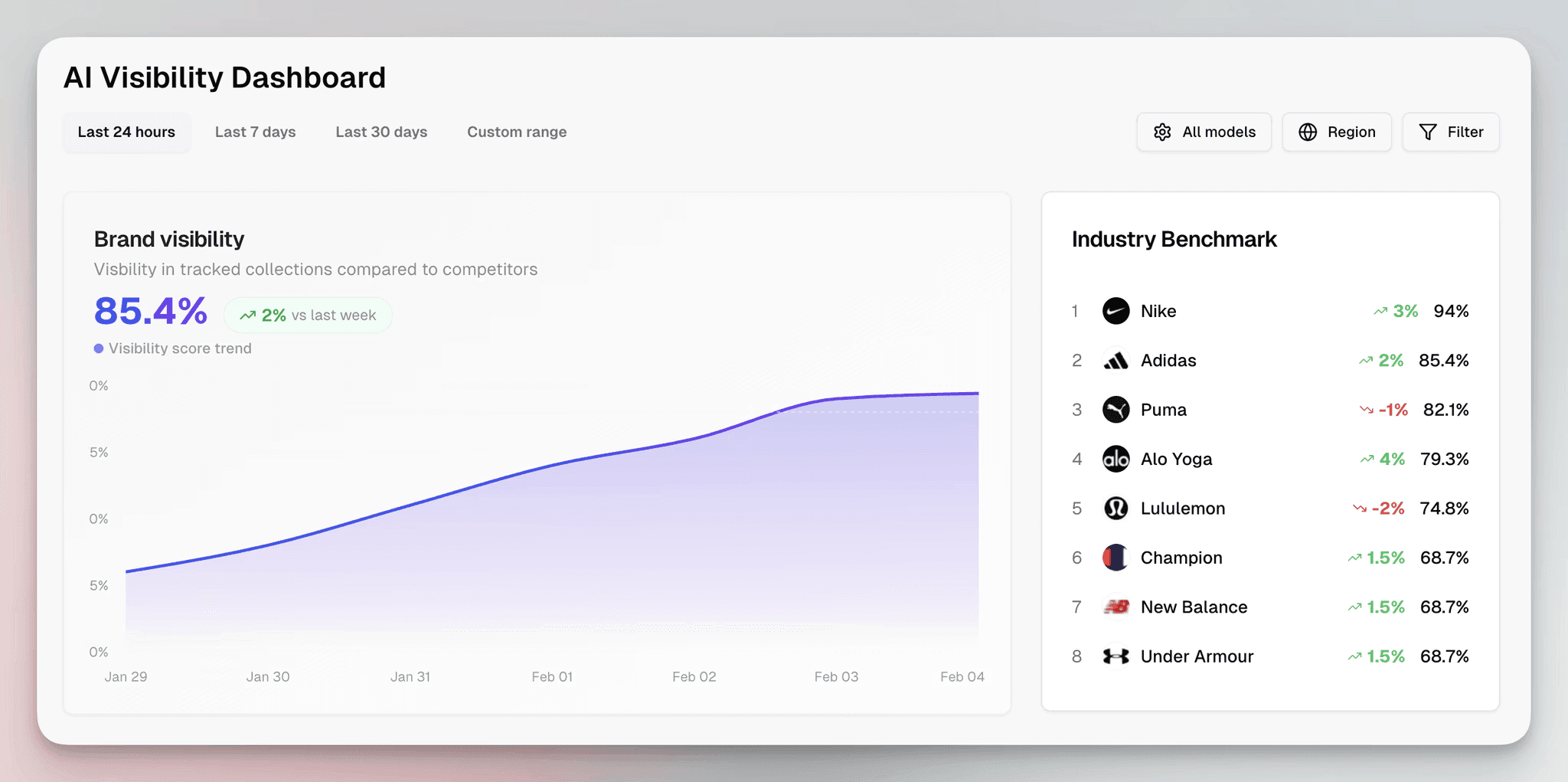
Best for: B2B teams that need to track and improve how their brand appears in AI-generated answers across ChatGPT, Perplexity, Gemini, and Claude.
Traditional SEO tools track how your brand ranks in Google. Erlin tracks how your brand appears when a buyer prompts an AI assistant with a category or purchase-intent question. These are increasingly the same buyer, in the same research session, on the same day.
Only 16% of brands systematically track AI search performance, meaning the 84% who don't are operating without data on a channel that's growing in importance every month. Erlin fills that gap.
The platform monitors brand citations across four AI platforms, tracks prompt coverage (how many category-relevant prompts surface your brand), and benchmarks your AI visibility against competitors. The data reveals where your brand is accurate, where it's missing, and where it's being misrepresented.
What it does well for B2B: The AI Visibility Ladder framework gives teams a clear benchmark: where does your brand sit, and what's required to move to the next tier?
The error detection feature identifies when AI platforms surface incorrect information about your product or pricing; monitored brands detect errors in 14 days on average, compared to 67 days for unmonitored brands. (Erlin data, 500+ brands, 2026)
What to watch: Erlin is a specialized AI visibility tool, not a traditional SEO platform. Teams still need a keyword research tool, a technical SEO tool, and a content optimization tool to cover the full stack. Erlin adds the AI channel on top of that foundation.
Pricing: Pricing on request. Check your AI visibility to see your current prompt coverage.
Semrush
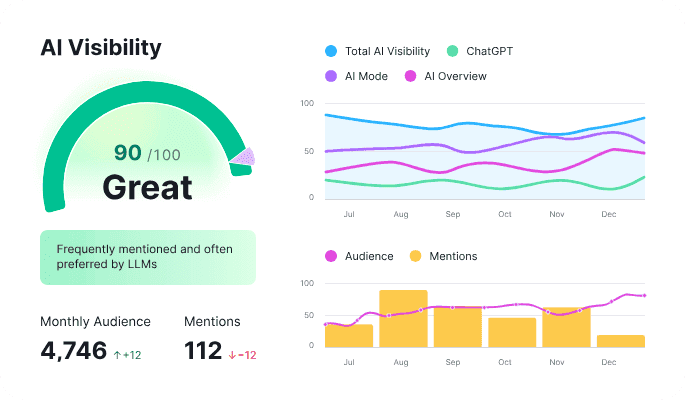
Best for: B2B teams that want one platform to cover keyword research, competitive intelligence, site audits, and AI visibility tracking.
Semrush remains the most comprehensive SEO platform on the market. Its Keyword Magic Tool gives access to over 25 billion keywords across 142 geographic databases.
For B2B teams, the depth of the keyword data matters less than what Semrush does with it. The AI Copilot surfaces recommendations from your existing data, flagging keyword opportunities, content decay, and technical issues before you ask.
That's a real time-saver for lean marketing teams juggling SEO alongside paid channels and product launches.
For AI visibility, Semrush now tracks brand mentions across ChatGPT, Perplexity, Google AI Overviews, and Gemini, with a Prompt Tracking feature that lets you follow custom prompts with daily visibility updates. For B2B companies where pipeline attribution matters, that's a meaningful addition to the stack.
Beyond SEO, Semrush provides tools for managing Google Ads campaigns, planning content strategies with AI-powered suggestions, scheduling social media posts, and generating white-label client reports. For teams juggling multiple marketing channels, this consolidation can replace three or four separate subscriptions.
What it does well for B2B: ContentShake AI produces SEO-optimized outlines that align with buyer intent. The keyword clustering feature groups semantically related terms automatically, saving hours of manual work when building topic clusters for complex B2B categories. Intent classification helps teams prioritize keywords based on where they sit in the buying cycle.
What to watch: The Pro plan starts at $139.95/month, and the full AI toolkit requires higher tiers. The interface spans 55+ features, which can be genuinely overwhelming during onboarding. Budget for the Guru plan ($249.95/month) if content marketing is central to your strategy; ContentShake AI and advanced competitive analysis aren't available on Pro.
Pricing: $139.95/month (Pro), $249.95/month (Guru), $499.95/month (Business). 14-day free trial available.
Ahrefs
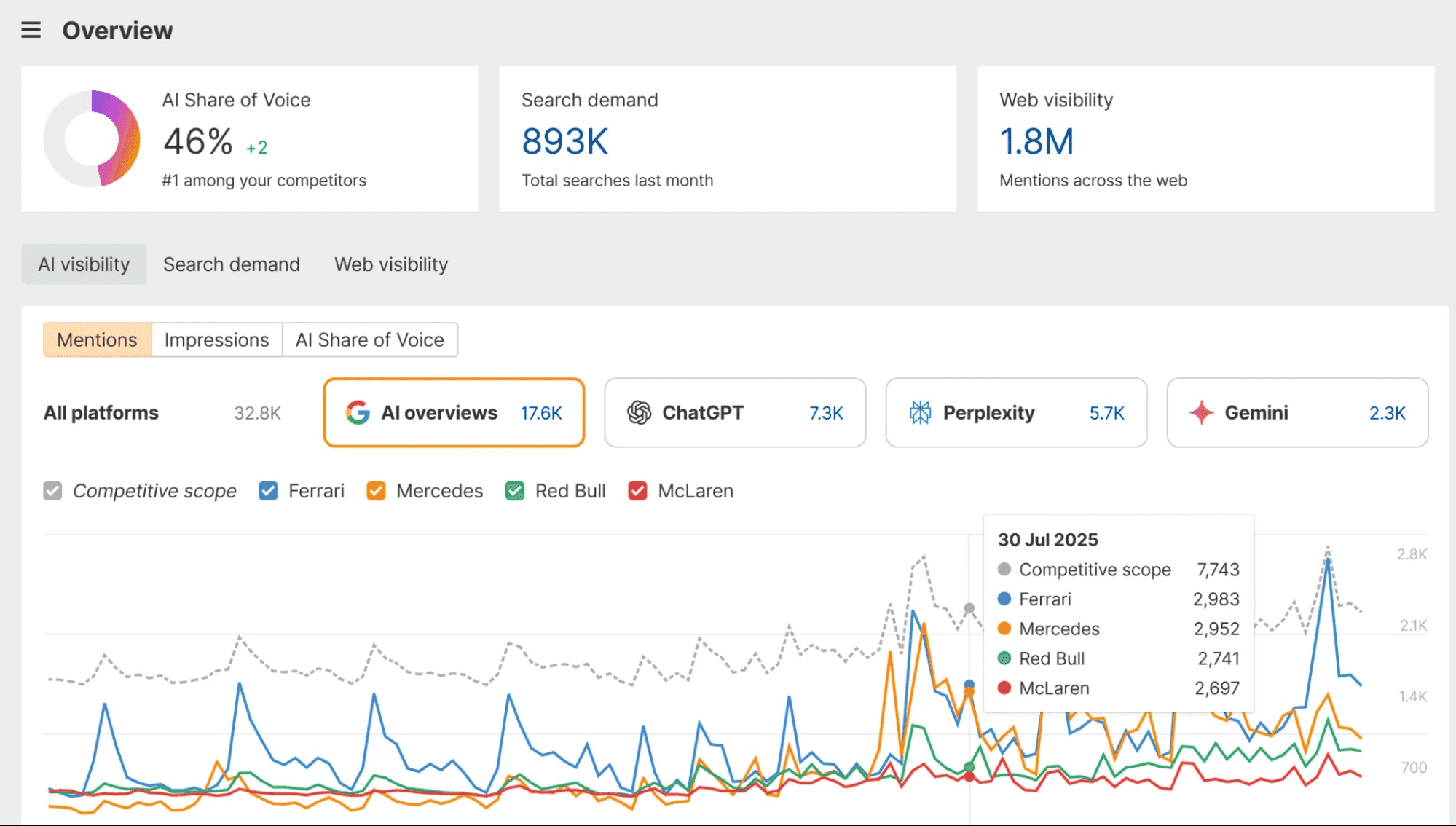
Best for: B2B teams that prioritize backlink analysis, competitor research, and deep keyword exploration.
Ahrefs has built arguably the most comprehensive backlink index on the web: 35 trillion backlinks from 500 million referring domains. The platform's crawler, AhrefsBot, is the second most active web crawler after Googlebot, processing approximately 8 billion pages daily.
For B2B companies where thought leadership and strategic link building are core to the SEO motion, Ahrefs gives you accuracy that competing tools don't match. The Site Explorer shows which domains link to your competitors but not to you.
That gap analysis drives outreach prioritization that Semrush can cover in breadth but rarely matches in precision.
Ahrefs approaches AI visibility from the brand and entity angle. Their Brand Radar tracks how often AI systems mention or cite your brand, benchmarks you against competitors, clusters prompts into topics, and shows share of voice across multiple AI tools, including AI Overviews, ChatGPT, and Perplexity.
What it does well for B2B: Ahrefs Keyword Explorer provides traffic potential calculations that account for zero-click losses from featured snippets and AI Overviews, a more accurate metric for B2B content planning than raw search volume. The Content Gap tool identifies topics competitors rank for that you don't, which maps directly to planning high-intent cluster content.
What to watch: Ahrefs uses a credit-based pricing model. The Lite plan provides 500 credits monthly, and many reports consume credits when accessing new data. Teams that pull frequent ad-hoc reports will hit limits faster than the plan tier suggests. Content marketing tools are less developed than Semrush's; treat Ahrefs as a specialist, not an all-in-one.
Pricing: $129/month (Lite), $249/month (Standard), $449/month (Advanced). No free trial; limited free Webmaster Tools available.
Screaming Frog
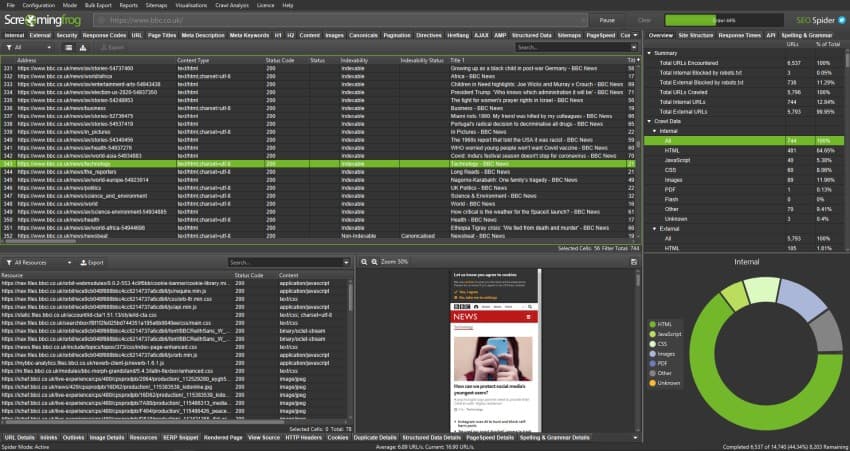
Best for: Technical SEO audits on B2B sites with complex architectures, JavaScript frameworks, or large page counts.
Screaming Frog crawls your website the way a search engine does, surfacing broken links, redirect chains, duplicate content, missing metadata, thin pages, and crawl depth issues. It's the standard tool for technical SEO audits.
B2B SaaS sites accumulate technical debt fast. Product pages, integration directories, documentation hubs, and localized landing pages create URL structures that break in ways a standard marketing audit misses. A Screaming Frog crawl before a site migration or major content push is the difference between a clean launch and a six-month rankings recovery.
JavaScript rendering mode allows Screaming Frog to crawl sites built with JavaScript frameworks like React, Next.js, and Vue as a browser would, revealing indexability issues that other crawlers skip entirely. For B2B SaaS companies on modern stacks, this matters.
What it does well for B2B: Integrates with Google Analytics, Search Console, and Ahrefs to pull in external data during the crawl. Schema markup validation checks are built in. The free version handles sites up to 500 URLs, which covers most early-stage B2B sites completely. At £259/year for the paid license, it's the highest return-on-investment tool in most SEO stacks.
What to watch: Screaming Frog is a desktop application. No cloud access, no team collaboration, no shared dashboards. For organizations where developers and SEO need to work together on audit findings, Sitebulb's visual reports may serve better. Screaming Frog also doesn't provide keyword research or backlink data.
Pricing: Free up to 500 URLs. Paid at £259/year (~$325 USD).
Surfer SEO
Best for: Content teams that publish at volume and need NLP-driven scoring to compete for intent-driven B2B keywords.
Surfer tells you exactly what to write to rank for a target keyword. The Content Editor analyzes the top-ranking pages, then gives you a real-time score based on term inclusion, heading structure, target word count, and semantic coverage. For B2B teams running a content-driven SEO motion (thought leadership, product comparisons, category guides), Surfer compresses the optimization cycle from hours to minutes.
Recent updates added AI Visibility Tracking on Pro plans and above, brand voice controls, a plagiarism checker, a Humanizer to reduce AI-sounding prose, rank-drop detection, and cannibalization reports.
What it does well for B2B: Integrations with Google Docs and WordPress mean writers never leave their working environment to check scores. The Topical Map feature helps plan content clusters around buyer intent, which is the right architecture for long B2B sales cycles where multiple touchpoints build toward a purchase decision.
What to watch: Surfer's keyword research is basic compared to Ahrefs or Semrush. Treat it as an optimization layer paired with a dedicated research tool, not a standalone platform. AI visibility tracking is locked to Pro and above ($219/month). Teams on the Essential plan won't get that feature.
Pricing: $99/month (Essential), $219/month (Scale), custom Enterprise.
Clearscope
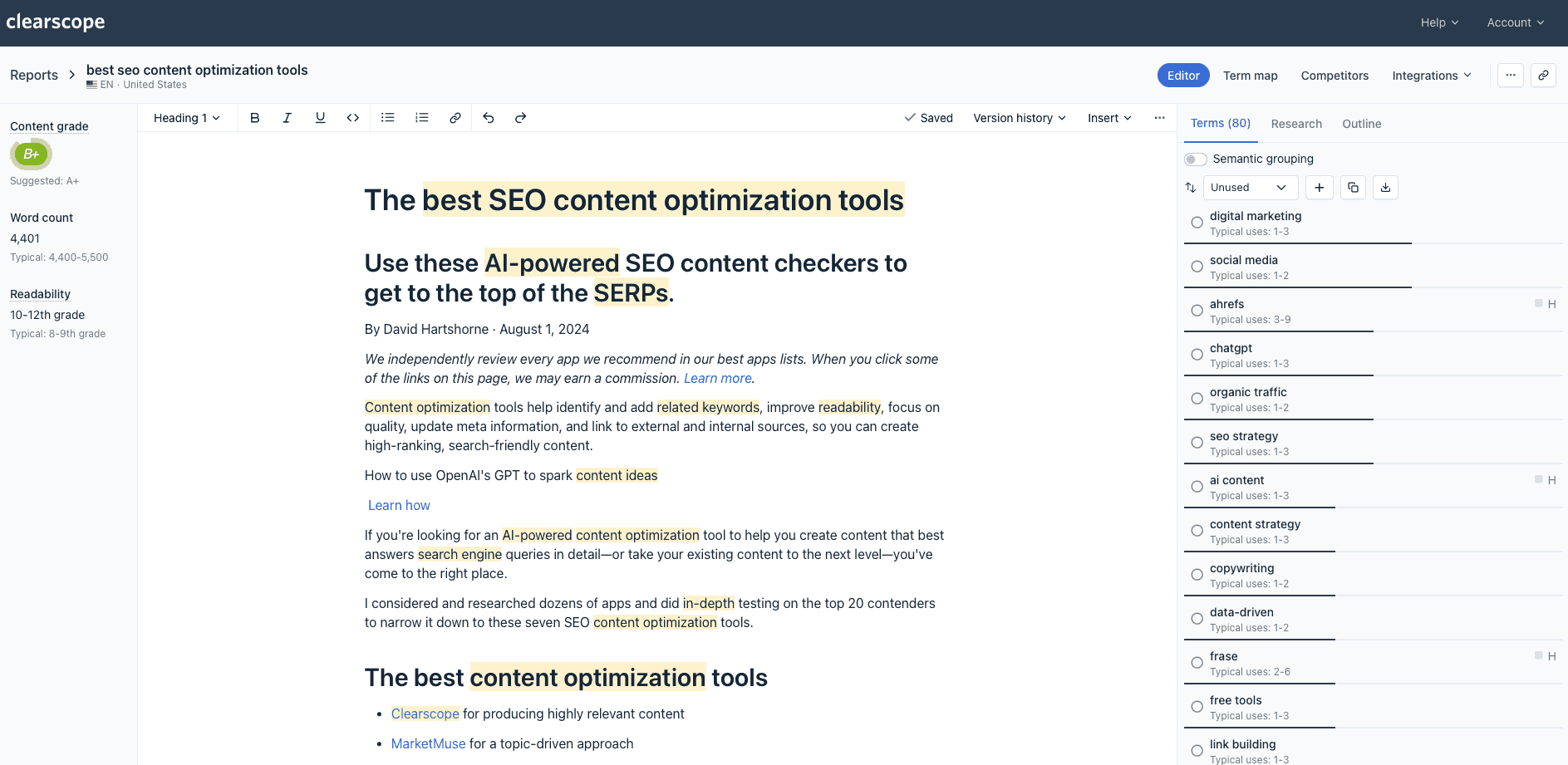
Best for: Enterprise content teams and agencies that produce high volumes of B2B content and need consistent semantic quality at scale.
Clearscope analyzes the semantic relationships between terms that top-ranking content uses. It generates content reports that show which terms and topics your content should cover to be considered comprehensive by search engines.
The difference between Clearscope and Surfer is not capability; it's workflow. Clearscope scores are straightforward enough for writers who don't know SEO. The report lands in a writer's hands and tells them, plainly, what to add. For enterprise teams where the writer and the SEO strategist are different people, Clearscope creates fewer friction points.
What it does well for B2B: Content Inventory tracks how existing content performs over time and flags pieces that need refreshing, relevant for B2B teams managing large evergreen article libraries. The Google Docs integration is cleaner than most competitors. Unlimited team members on all plans is a real differentiator for organizations where multiple writers access reports simultaneously.
What to watch: Clearscope starts at $170/month for the Essentials plan. That's a meaningful budget for a single-function tool. Teams on tighter budgets with one or two content producers should look at Surfer first. Clearscope earns its price at enterprise scale, not for small-team content operations.
Pricing: $170/month (Essentials), $1,200/month (Business), custom Enterprise.
Google Search Console
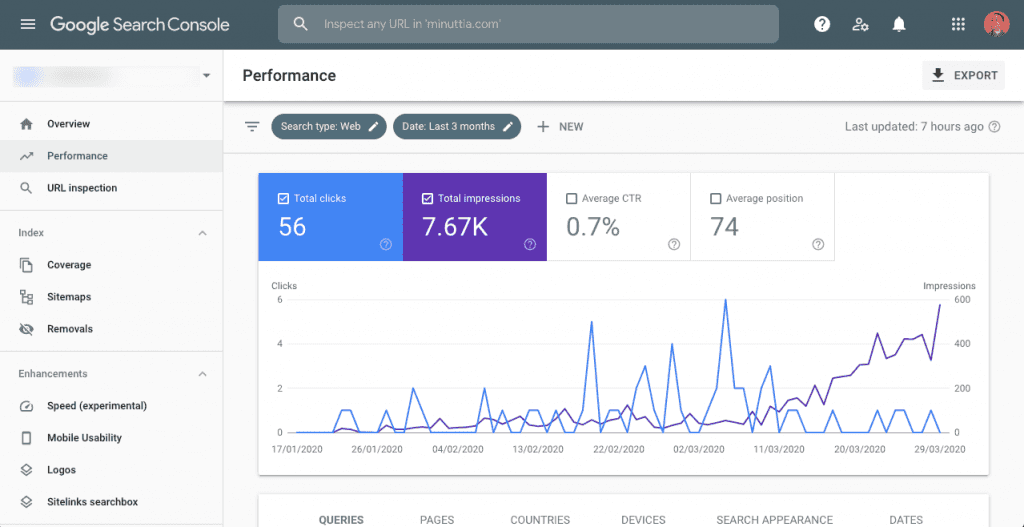
Best for: Every B2B website, without exception. The most important free SEO tool available.
Google Search Console gives you direct insight into how Google sees your website. It shows which queries drive traffic to your site, which pages are indexed, and any crawling or indexing issues Google has encountered.
No third-party tool replicates this data. Semrush estimates impressions. Ahrefs estimates traffic. Search Console shows you what Google actually sees, what it crawls, and where it finds problems. Every optimization effort should start here.
For B2B specifically, Search Console reveals the long-tail queries that drive buyer-intent traffic, often queries that never show up in keyword research tools because their monthly search volume sits below the floor that those tools track. These low-volume, high-intent queries are where the B2B pipeline is built.
What it does well for B2B: Performance reports show which pages generate impressions and clicks for commercial-intent keywords. The Coverage report identifies pages that aren't being indexed and explains why. Core Web Vitals reports flag technical performance issues that affect rankings. The Insights view surfaces quick wins by showing pages that are close to page one but stuck in positions 4 through 10.
What to watch: Search Console shows data only for your own site. It doesn't give competitor intelligence, keyword research, or content optimization. It's the foundation, not the full stack. Pair it with GA4 to connect search performance to on-site behavior and conversion data.
Pricing: Free.
How to build your B2B SEO stack by stage
The right stack changes as your company grows. Buying enterprise tools before you have the content volume to use them is how marketing budgets get wasted.
Early-stage (pre-Series A or under 50 pieces of content): Google Search Console and GA4 are free and sufficient for performance monitoring. Ahrefs Lite or Semrush Pro covers keyword research and basic competitor analysis. Add Screaming Frog's free version for technical health. Total: $129 to $140/month.
Growth-stage (Series A to B or 50 to 200 pieces of content): Upgrade to Semrush Guru or Ahrefs Standard for deeper competitive intelligence and content clustering. Add Surfer SEO for content optimization. Run Screaming Frog paid license for monthly technical audits. Add Erlin to start tracking AI visibility before competitors lock in coverage. Total: $400 to $600/month.
Scale-stage (Series C+ or 200+ pieces of content): Build a specialized stack. Ahrefs for backlinks and competitor research. Clearscope for content optimization at scale. Screaming Frog or Sitebulb for technical audits. Semrush for broader competitive intelligence and reporting. Erlin for AI visibility monitoring and competitive benchmarking. Total: $800 to $1,200/month.
The consistent principle across all stages: the best B2B SEO tool is the one your team will actually use consistently. A $500/month platform that sits unused is worse than a $65/month tool that gets reviewed every week. Start lean. Get the workflow right with two or three core tools before adding more.